
Why Premium Graphic Tees Cost More: A Pricing Breakdown
Table of Contents
- What Drives the Price of Premium Graphic Tees
- Raw Materials: Cotton Quality and Fabric Weight Matter
- Types of T-Shirt Printing Methods and Their Cost Impact
- Design, Licensing, and Artist Compensation
- How to Tell If a T-Shirt Is High Quality
- Longevity vs. Price: The True Cost Breakdown
- How to Wash Graphic Tees to Protect Your Investment
- Conclusion
Last Updated: August 23, 2026
What Drives the Price of Premium Graphic Tees
Premium graphic tees cost more because of material quality, production methods, design licensing, and construction standards. The price difference between a $15 mass-market tee and a $20-25 premium option reflects real, measurable differences in how the shirt is made. At Awake Republic LLC, the focus on original graphic designs and high-quality construction means every piece is built to provoke thought and last through regular wear.
When shopping online, you can't feel fabric weight or examine stitch quality. This invisibility leads to the assumption that premium pricing is arbitrary rather than substance-based. It's not. Raw material costs, printing method selection, artist compensation, construction quality, and supply chain efficiency all contribute to the final price. A t-shirt using premium cotton, durable printing techniques, fair designer compensation, and reinforced seams costs more to produce than one cutting corners on any front.
Raw Materials: Cotton Quality and Fabric Weight Matter
Not all cotton is created equal, and fiber quality directly impacts how the shirt performs and feels.
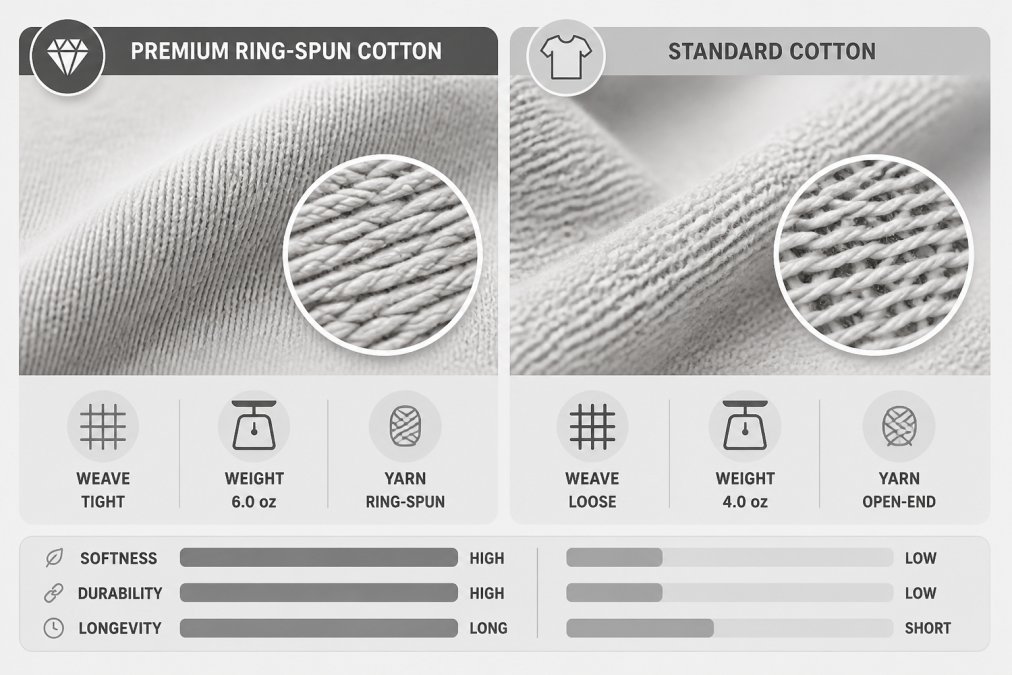
Ring-spun cotton represents a significant step up from standard carded cotton (peer-reviewed research). The ring-spinning process twists individual fibers together more tightly and uniformly, creating stronger, softer yarn that resists pilling, holds color better, and maintains shape through repeated washing.
Fabric weight, measured in GSM (grams per square meter), determines durability and longevity. Premium graphic tees typically use 142-160 GSM fabric, compared to budget options at 130-140 GSM. The Awake Republic® Logo Streetwear T-Shirt uses 4.2 oz./yd² ring-spun cotton, which provides the weight needed to hold graphics without excessive bulk. The sweet spot for durability without sacrificing wearability is in the 140-160 GSM range.

Combed cotton involves an additional processing step that removes short fibers and impurities, leaving only the longest, strongest fibers. This produces softer fabric with better color retention and reduced pilling. When producing thousands of units, the raw material cost difference between premium and budget cotton multiplies quickly, making this a deliberate choice to prioritize durability and feel.
Types of T-Shirt Printing Methods and Their Cost Impact
The printing method is one of the largest cost differentiators in the final price.
Screen printing pushes ink through a mesh screen onto fabric and remains popular because it's cost-effective for large runs and produces durable, vibrant prints. However, it requires separate screens for each color, making it expensive for multi-color designs. For limited edition runs, screen printing becomes economically inefficient.
Direct-to-garment (DTG) printing uses specialized inkjet technology to spray ink directly onto fabric. This method excels at reproducing detailed, multi-color designs without setup costs. The trade-off is that DTG is slower per unit and more expensive for high-volume production. The ink sits on top of the fabric rather than bonding with it, affecting durability if the shirt isn't cured properly (peer-reviewed research).
Heat transfer printing applies pre-printed designs using heat and pressure. It's economical for small runs and allows photorealistic graphics, but prints can crack or peel with aggressive washing, making them less durable than screen-printed alternatives.
Embroidery stitches thread into fabric to create designs. It's expensive and time-consuming but incredibly durable and creates a premium feel, typically reserved for high-end pieces.
Design, Licensing, and Artist Compensation
Original graphic design carries real costs that mass-market retailers often obscure or eliminate.
Creating an original design requires hiring a designer or maintaining an in-house creative team. A single design might go through 5-10 rounds of revision before it's ready for production. For a brand like Awake Republic LLC that emphasizes original graphics designed to provoke thought, this investment is substantial.
Artist licensing and royalties add another layer of cost. If a brand uses artwork from an independent artist, they typically pay either an upfront licensing fee or per-unit royalty. Premium brands recognize that fair artist compensation is part of the cost of doing business.
Limited edition drops create scarcity and perceived value. When a design is only produced in limited quantity, the per-unit production cost might be higher because volume doesn't justify the same economies of scale. However, scarcity justifies a higher retail price and often creates demand that offsets the higher production cost.
Mass-market retailers solve the design cost problem by using generic templates or stock imagery. Premium brands invest in distinctive, original work that stands out and means something to the wearer.
How to Tell If a T-Shirt Is High Quality
Evaluating a graphic tee's quality requires checking multiple factors that reveal how it was made and how long it will last.
Feel the weight and thickness. Premium tees have substantial weight without being stiff and drape naturally. Rub the fabric; premium cotton feels smooth and soft. Check for pilling by rubbing firmly; premium ring-spun cotton resists pilling far better than carded alternatives.
Examine construction details. Premium tees include side-seams that run along the sides, creating a more structured garment that holds its shape. Look for shoulder-to-shoulder taping, which reinforces shoulder seams and prevents stretching. Check the hem for double-stitching or reinforcement.
Inspect the graphic itself. High-quality prints have crisp, clean edges without bleeding. The ink should feel integrated with the fabric, not sitting on top like a sticker. Premium prints feel smooth or slightly raised, not rough or flaking.
Check the tag and label. Premium brands use quality tags that don't itch. The care instructions should be clear and specific. Look at the fiber content; 100% cotton is standard for premium tees. If the label says "preshrunk," that's a positive sign.
The Awake Republic® Logo Streetwear T-Shirt exemplifies these quality markers: 100% combed and ring-spun cotton, 4.2 oz./yd² fabric weight, pre-shrunk treatment, side-seamed construction, and shoulder-to-shoulder taping.
Longevity vs. Price: The True Cost Breakdown
The real cost of a t-shirt is the cost per wear over its actual lifespan.
A $15 budget tee that lasts 50 wears costs $0.30 per wear (the FTC). A $25 premium tee that lasts 200 wears costs $0.125 per wear. The premium option is actually cheaper in the long run, even though the upfront price is higher.
Factor |
Budget Tee |
Premium Tee |
|---|---|---|
Retail Price |
$15 |
$25 |
Estimated Lifespan (wears) |
50 |
200+ |
Cost Per Wear |
$0.30 |
$0.125 |
Graphic Durability |
Fades/cracks after 20-30 washes |
Remains vibrant after 100+ washes |
Fabric Durability |
Pilling, stretching, fading |
Maintains shape and color |
Shrinkage |
Unpredictable, often significant |
Controlled, minimal |
Premium tees hold up better because materials and construction are designed for longevity. The psychology of investment also plays a role; when someone pays more for a shirt, they're more likely to care for it properly, extending its life.
How to Wash Graphic Tees to Protect Your Investment
Proper washing technique directly impacts how long a graphic tee remains wearable and vibrant.
Turn the shirt inside out before washing. This protects the graphic from direct friction and abrasion. The graphic faces inward, away from agitation, significantly extending its lifespan.
Use cold water for washing. Hot water fades colors faster and can cause shrinkage. Cold water preserves color vibrancy and is gentler on the fabric.
Wash with similar colors to prevent dye bleeding. Dark graphic tees should wash with other dark items. Bright or white graphics should wash with light-colored items.
Choose a gentle or delicate cycle. The agitation in a normal wash cycle causes more wear on the fabric and graphic than a gentler cycle.
Air dry instead of machine drying. The heat in a dryer can cause shrinkage and fade colors. Air drying dramatically extends the life of the graphic and fabric.
Avoid bleach and harsh chemicals. If stain treatment is needed, use mild, targeted spot treatment rather than soaking in harsh chemicals.
Wash less frequently when possible. Every wash causes some wear on the fabric and graphic. Spot-cleaning or airing out the shirt between wears reduces the number of full washes needed.
Conclusion
Premium graphic tees cost more because they're built differently, with better materials, more durable printing methods, original designs, and construction quality that prioritizes longevity. The price reflects real, measurable differences in how the shirt is made and how long it will last.
When calculated by cost per wear over the shirt's actual lifespan, premium tees often cost less than budget alternatives. Awake Republic LLC's commitment to original designs, quality construction, and thoughtful materials means each piece is built to start conversations and withstand regular wear. Explore the collection at awakerepublic.net to experience the difference quality construction makes.
Frequently Asked Questions
Q: Why are graphic tees so expensive now?
Premium graphic tees cost more due to several interconnected factors: higher-quality cotton (ring-spun rather than carded), superior printing methods that preserve color and detail, artist licensing fees, and smaller production runs. Each layer adds cost, but also durability. A $20 premium graphic tee made from 4.2 oz. ring-spun cotton with quality printing will outlast cheaper alternatives, making it a better long-term value.
Q: What's the difference between premium and regular t-shirts?
Premium t-shirts use ring-spun cotton (stronger, softer fibers) versus carded cotton in regular tees. They feature higher fabric weight (measured in GSM), better construction with shoulder-to-shoulder taping and side seams, pre-shrunk fabric, and superior printing methods. Premium designs also involve artist licensing and original artwork rather than generic prints. The result is a garment that resists fading, shrinkage, and pilling.
Q: How much should a high-quality graphic tee cost?
Quality graphic tees typically range from $18-$30 for independent brands offering original designs and premium materials. This covers raw material costs (ring-spun cotton), printing (screen printing or direct-to-garment), artist compensation, manufacturing overhead, and supply chain management. Awake Republic's graphic tees at $19.99 represent fair pricing for 100% ring-spun cotton with 4.2 oz./yd.² fabric weight and original designs. Fast-fashion alternatives under $15 use lower-quality cotton and cheaper printing that deteriorates quickly.
Q: Does the printing method affect the price of a graphic tee?
Yes, significantly. Screen printing costs more upfront but offers durability and vibrant colors for large runs. Direct-to-garment (DTG) printing is ideal for complex, multi-color designs and small batches, with higher per-unit cost. The printing method you choose directly impacts both the final price and how long the graphic lasts, which is why premium tees justify higher costs through superior print durability.