

How to Wash Graphic Tees Without Ruining the Print
Table of Contents
- Why Graphic Tees Need Special Care
- How to Wash Graphic Tees: Step-by-Step
- Best Laundry Detergent for Graphic Tees
- How to Iron Graphic Tees Without Damaging the Print
- Hand-Washing and Travel Care for Graphic Tees
- Eco-Friendly Laundry Habits That Also Protect Your Prints
- How to Wash Graphic Tees: Common Mistakes to Avoid
Last Updated: August 13, 2026
Why Graphic Tees Need Special Care
Knowing how to wash graphic tees correctly is the single most important factor in how long the print lasts. Graphic tees are not the same as plain cotton shirts, treating them identically is the fastest way to ruin a design you care about. At Awake Republic LLC, where every tee carries a bold, original print meant to last, this distinction matters from the moment a shirt ships.

End The Endless Wars T-Shirt - 100% Cotton Libertarian Streetwear | Awake Republic®
The problem is friction, heat, and harsh chemistry. All three degrade printed graphics faster than most people expect. Fading, cracking, and peeling are not inevitable signs of wear, they are almost always the result of preventable laundry mistakes. The good news: once you understand what damages a print, the fixes are straightforward.
Graphic tees deserve deliberate laundry care because the printed surface is fundamentally different from the fabric beneath it. Ink layers, heat-applied films, and screen-printed coatings sit on top of cotton fibers rather than bonding into them the way dye does. Aggressive washing attacks those surface layers directly.
How Printing Methods Affect Wash Durability
Not all graphic tees are printed the same way, and the method used determines how delicate the design actually is.
Screen printing is the most common method for high-volume graphic tees. Ink is pushed through a mesh stencil directly onto the fabric and then cured with heat. Screen-printed designs are generally durable, but they crack over time when exposed to high heat and harsh detergents.
Heat transfer printing applies a pre-printed design using a heat press. The result is a smooth, almost plastic-like surface. Heat transfer prints are more sensitive to high dryer temperatures than screen prints, as the adhesive layer can separate from the fabric if overheated repeatedly.
Direct-to-garment (DTG) printing uses inkjet technology to print directly onto fabric. DTG produces highly detailed designs but requires the most careful washing, as the ink sits closer to the fiber surface and is more vulnerable to fading from optical brighteners found in many standard detergents.
Understanding which method produced a print helps set the right expectations. When in doubt, treat every graphic tee as if it were DTG, the most conservative approach protects all three types.
How to Wash Graphic Tees: Step-by-Step
Washing graphic tees correctly takes almost no extra effort. The key is building a few deliberate habits into a routine most people already have.
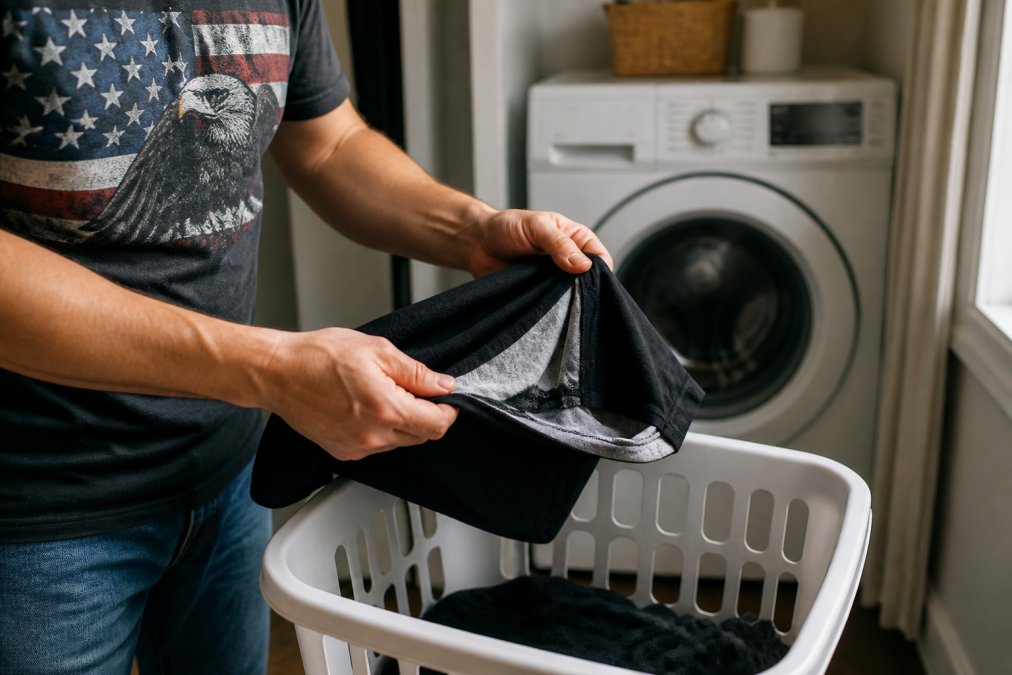
A pair of hands turning a bold patriotic graphic tee inside out over a laundry basket, with a front-loading washing machine visible in the soft background, warm natural light from a nearby window
Step 1: Sort by Color and Turn Tees Inside Out
Sort graphic tees by color before washing. Dark tees with light graphics should never go in with heavily soiled whites, and new tees should always be washed separately the first time to prevent color bleeding.
Turning each tee inside out before it goes into the machine is the single most effective step for print preservation. It puts the graphic on the inside of the drum, shielded from direct friction against other garments and the drum wall. Fasten any buttons or zippers on other garments in the same load, as metal hardware is abrasive and will scratch a print.
Step 2: Choose Cold Water and a Gentle Cycle
Cold water is non-negotiable for graphic tees. Hot water causes the cotton fibers to contract and expand aggressively, stressing the ink layer sitting on top and accelerating color fading. According to the U.S. Department of Energy's guidance on laundry efficiency, washing in cold water uses significantly less energy and is equally effective for everyday clothing.
Select the gentle cycle or delicate setting. A standard wash cycle runs at higher spin speeds and agitation rates that create unnecessary friction against print surfaces. Keep the load size moderate to reduce friction between garments.
Step 3: Pick the Right Detergent and Skip Harsh Chemicals
The right detergent for graphic tees is a mild, liquid formula without optical brighteners, bleach, or peroxide. Powder detergents can leave residue on printed surfaces. Liquid formulas rinse cleaner.
Optical brighteners, common in standard detergents, work by absorbing UV light and re-emitting it as visible blue light. These compounds bind to fabric and gradually dull the colored inks on graphic prints. Choose a detergent specifically labeled as free of optical brighteners.
Never use bleach on graphic tees, it attacks the ink chemistry directly and will destroy a print in one wash. Skip fabric softener as well, as it coats fibers with a waxy residue that can dull prints and interfere with heat transfer adhesion. Use the minimum recommended detergent dose to avoid residue buildup.
Step 4: Air Dry Instead of Machine Drying
Air drying is the single biggest upgrade for garment longevity. Heat is the primary enemy of both screen print and heat transfer designs. A standard dryer cycle runs hot enough to soften the adhesive in heat transfer prints and cause screen-printed ink to crack faster.
Hang graphic tees inside out on a drying rack or hanger. Keep tees out of direct sunlight while air drying, as UV exposure fades both the fabric and the print. If a dryer is the only option, use the lowest heat setting available and remove the tee while it is still slightly damp.
Best Laundry Detergent for Graphic Tees
The best laundry detergent for graphic tees is a mild, liquid, dye-free formula that contains no optical brighteners, bleach, or peroxide. These additives are standard in many household detergents but are specifically harmful to printed graphics over repeated wash cycles.
Look for detergents marketed as "free and clear" or "sensitive", these formulations omit the most damaging additives while still cleaning effectively.
Feature |
Look For |
Avoid |
|---|---|---|
Formula type |
Liquid |
Powder (leaves residue) |
Brighteners |
None / free-and-clear |
Optical brighteners |
Bleach agents |
None |
Chlorine bleach, peroxide |
Fragrance |
Unscented preferred |
Heavy fragrance additives |
Dose |
Minimum recommended |
Excess (causes buildup) |
A common mistake is assuming that more detergent means cleaner clothes. For graphic tees, excess detergent is actively harmful, it leaves residue on the print surface and requires more aggressive rinsing that increases mechanical wear.
How to Iron Graphic Tees Without Damaging the Print
Ironing graphic tees incorrectly destroys prints fast. Direct heat from an iron applied to a screen print or heat transfer design will scorch, melt, or permanently distort the graphic.
Always iron graphic tees inside out with the print facing away from the iron plate. Place a thin cloth or parchment paper between the iron and the fabric for additional protection. Use a low to medium heat setting and never use steam directly on a printed area, as moisture combined with heat can cause heat transfer prints to bubble or lift at the edges.
For lightly wrinkled tees, hanging them in a bathroom during a hot shower often relaxes the fabric without any ironing at all. According to the Textile Exchange's fiber and fabric care guidelines, heat management is one of the primary factors in extending the useful life of printed garments.
Hand-Washing and Travel Care for Graphic Tees
Hand-washing is the gentlest possible method for graphic tees and the best option when machine washing is not available or when a tee needs spot cleaning on the road.
Fill a sink or basin with cold water and add a small amount of mild detergent. Submerge the tee inside out and gently agitate the water by hand. Avoid scrubbing the printed area directly. Let the tee soak for five to ten minutes, then rinse thoroughly with cold water until no detergent residue remains.
To remove excess water, press the tee gently against the side of the sink, never wring or twist it, as wringing distorts the fabric and can crack prints. Lay the tee flat on a clean towel, roll the towel up to absorb moisture, then hang or lay flat to finish drying.
For travel, a small bottle of mild liquid detergent handles most laundry needs without requiring access to a washing machine. Hotel bathroom sinks work well for this method, and hand-washing is actually gentler on graphic tees than most machine cycles.
Eco-Friendly Laundry Habits That Also Protect Your Prints
The habits that extend graphic tee life overlap almost entirely with eco-friendly laundry practices. Cold water washing reduces energy consumption significantly compared to warm or hot cycles and is better for prints. Air drying eliminates dryer energy use entirely while protecting heat-sensitive designs. Washing full loads rather than partial ones reduces the number of total cycles, which means less cumulative wear on every garment.
According to the Environmental Protection Agency's ENERGY STAR guidance on clothes washers, choosing cold water and full loads are among the most impactful changes a household can make to reduce laundry-related energy use.
Using less detergent is another overlap. Excess detergent is both wasteful and harmful to prints. Minimum effective doses clean clothes just as well while reducing synthetic fragrance and chemical additives entering the water supply.
How to Wash Graphic Tees: Common Mistakes to Avoid
Most print damage comes from a short list of repeated mistakes.
Washing in hot water. Hot water is the most common cause of premature fading and ink cracking. Cold water cleans equally well for everyday wear.
Skipping the inside-out step. This takes five seconds and eliminates direct friction on the print surface.
Using standard detergent with optical brighteners. These compounds dull colored inks over time. Switch to a free-and-clear formula.
Machine drying on high heat. This is the second-fastest way to crack a heat transfer print. Air drying extends print life significantly.
Ironing directly on the print. A single pass with a medium-hot iron on an unprotected graphic can cause permanent damage. Always use a barrier layer.
Washing too frequently. Graphic tees that are not heavily soiled do not need to be washed after every wear.
The American Cleaning Institute's fabric care resources offer additional guidance on reading care labels and choosing appropriate wash settings for different fabric types.
Awake Republic LLC designs every graphic tee to hold up over time, but even the highest-quality print needs the right laundry care to reach its full lifespan. The Don't Tread On Me T-Shirt and the Propaganda-Aid T-Shirt are both printed on 100% cotton and respond well to every technique covered in this guide. Cold water, inside out, air dry, three habits that cost nothing and protect everything.


Mistake |
Fix |
Impact on Print |
|---|---|---|
Hot water wash |
Switch to cold water |
Reduces fading and cracking |
Skipping inside-out |
Turn tee inside out every wash |
Eliminates direct print friction |
Standard detergent |
Use free-and-clear liquid formula |
Prevents optical brightener damage |
High-heat dryer |
Air dry or use lowest heat |
Prevents adhesive separation |
Direct ironing on print |
Use parchment paper barrier |
Prevents melting and distortion |
Overwashing |
Wash only when soiled |
Reduces cumulative wear |
Frequently Asked Questions
Should you wash graphic tees before wearing them for the first time?
Yes. A first wash removes manufacturing residue, loose dye, and any detergent residue from production. Turn the tee inside out, use cold water on a gentle cycle, and air dry. This pre-wash also shrinks the fabric slightly before you start wearing it regularly, so the fit stays consistent. For 100% cotton graphic tees like those from Awake Republic, this step is especially worth doing.
Are you supposed to wash graphic tees inside out?
Every time. Washing inside out keeps the print face away from direct friction against the drum and other garments. That friction is one of the main causes of cracking and fading on screen print and heat transfer designs. It takes two seconds and meaningfully extends the life of the graphic, so there is no good reason to skip it.
Can you put graphic tees in the dryer?
You can, but it shortens print life. High heat breaks down screen print and heat transfer inks faster than almost anything else in the laundry process. If you must use a dryer, select the lowest heat setting and remove the tee while it is still slightly damp. Air drying flat or hanging the tee is the better option for garment longevity and print preservation.
Is OxiClean safe for graphic tees?
OxiClean's oxygen-based formula is gentler than chlorine bleach, but it still contains peroxide compounds that can degrade print inks over time with repeated use. For stain removal on a graphic tee, spot-treat the stained area only, avoid applying the product directly to the print, and rinse thoroughly. For regular washing, a mild detergent without optical brighteners is the safer long-term choice.
This article was written using GrandRanker