
How to Spot High Quality Streetwear: 7 Key Indicators
Table of Contents
- How to Spot High Quality Streetwear: Start with Fabric Weight and Composition
- How to Check Garment Stitching Quality and Reinforcement
- Inspect Collar Construction and Ribbing Details
- Evaluate Print Techniques: Screen Printing vs. Direct-to-Garment
- Heavyweight Cotton Hoodie Quality: What to Look For
- How to Identify Fake Streetwear and Spot Counterfeits
- Assess Fit, Silhouette, and Shrinkage Expectations
- Conclusion
Last Updated: August 14, 2026
How to Spot High Quality Streetwear: Start with Fabric Weight and Composition
The foundation of quality streetwear lies in fabric composition and weight. Fabric weight, measured in GSM (grams per square meter), directly correlates with durability. Lightweight jersey at 150 GSM feels flimsy and transparent. Standard weight at 180-200 GSM provides the sweet spot for everyday wear. Heavyweight fleece and cotton jersey at 250-300 GSM delivers the substantial hand-feel that signals quality construction. Awake Republic's approach emphasizes 100% cotton fabrics that deliver both comfort and longevity.

The difference between weights becomes obvious when you hold garments side by side. Lightweight fabrics drape loosely and feel insubstantial. Heavyweight options have structure, weight, and presence. They hold their shape through washing and wear.
Understanding GSM and Cotton Jersey Weight
Cotton jersey comes in distinct weight categories that directly correlate with durability. Standard jersey runs 150-180 GSM for basic casual wear. Mid-weight jersey at 180-220 GSM provides better durability without excessive bulk. Heavyweight cotton jersey at 220-300 GSM represents premium construction, designed to last years rather than months.
Garment-dyed pieces are dyed after construction, allowing deeper color penetration and authentic fading patterns over time. Pigment-dyed fabrics receive color treatment before assembly, resulting in more consistent coloring but less character as they age. 100% cotton offers breathability and comfort but requires proper care to minimize shrinkage. Cotton blends with polyester add durability and reduce shrinkage, though they may reduce breathability slightly. Quality streetwear typically commits to pure cotton for authenticity and hand-feel.
Evaluating Hand-Feel and Drape
Run your fingers across the fabric surface. Quality cotton has smooth, consistent texture without pilling, those tiny balls of fiber that form on the surface. Pilling indicates loose fibers and poor yarn quality. A garment that pills after one wash will continue degrading with each subsequent wash.
Drape describes how fabric hangs on the body. Quality streetwear has controlled drape, structured enough to maintain silhouette but soft enough to move naturally. Hold the garment up and let it hang. Does it fall smoothly? Does it maintain the intended shape?
Run your fingers along the inside seams. Quality construction feels smooth and finished. Rough seams, exposed threads, or sharp edges indicate rushed manufacturing. The inside of a quality piece looks nearly as finished as the outside.
How to Check Garment Stitching Quality and Reinforcement
Stitching quality separates garments that hold together from those that unravel. Poor stitching fails at stress points: armholes, necklines, hem lines, and seams under tension. Quality construction uses reinforcement techniques that prevent seams from splitting during normal wear.
Double-Needle and Taped Seams
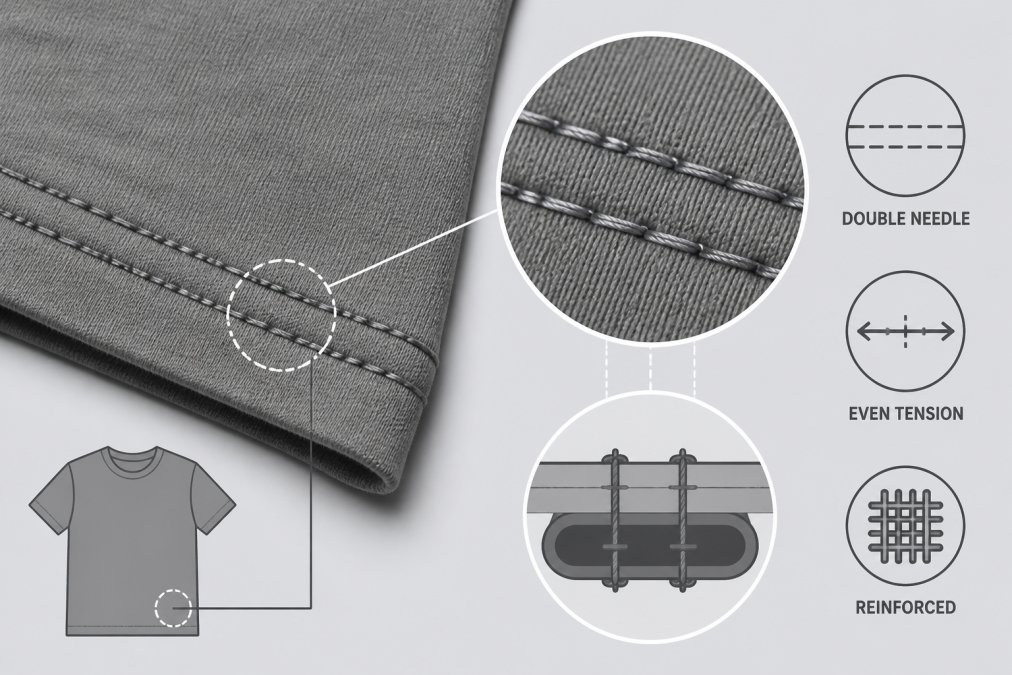
Double-needle stitching creates two parallel rows of thread instead of one, effectively doubling seam strength. This technique appears on quality t-shirts at necklines and armholes where stress concentrates. Examine the neck opening; if you see two parallel stitch lines, the maker invested in durability. Single-needle construction costs less but fails faster under tension.

Taped seams add reinforcement fabric behind the stitch line, creating a buffer between thread and fabric. This prevents seams from tearing through the material itself. Many quality hoodies and jackets feature taped seams on shoulders and side panels. Check seam tension by examining stitch consistency. Uniform stitches spaced evenly indicate machine precision and quality control. Irregular spacing or loose/tight sections suggest rushed production or equipment problems.
Overlock and Chain Stitching Techniques
Overlock stitching, also called serging, wraps thread around fabric edges to prevent fraying. This technique appears on hem edges, sleeve cuffs, and seams inside quality garments. Chain stitching creates a flexible seam by linking loops of thread rather than piercing through fabric repeatedly. This technique works particularly well on stretchy fabrics and side seams where flexibility matters.
Examine the inside of any streetwear piece. Quality construction shows visible overlock work, reinforced seams, and finished edges throughout. Cheap construction leaves raw edges, single-needle seams, and visible manufacturing shortcuts.
Inspect Collar Construction and Ribbing Details
The collar and cuffs reveal whether a garment will maintain its shape or stretch out into a sloppy mess. Collar ribbing, the knit fabric that forms the neck opening, either holds its shape or becomes loose and saggy with wear. Quality ribbing uses appropriate thickness and density to maintain structure.
Examine the collar opening. Quality garments have ribbing that feels substantial and maintains tension without being uncomfortably tight. Press your fingers into the ribbing; quality construction resists deformation and springs back. The attachment method matters equally. Quality collars are sewn with multiple rows of stitching, often with reinforcement at stress points where the collar meets the shoulder seams.
Cuff ribbing on sleeves follows the same principle. Quality sleeves have substantial ribbing that maintains tension and shape. Press the cuff; does it feel dense and supportive, or thin and flimsy?
Evaluate Print Techniques: Screen Printing vs. Direct-to-Garment
The graphic design that makes streetwear distinctive must survive repeated washing without cracking, fading, or peeling. Two primary techniques dominate quality streetwear: screen printing and direct-to-garment (DTG) printing.
Screen Print Durability and Colorfastness
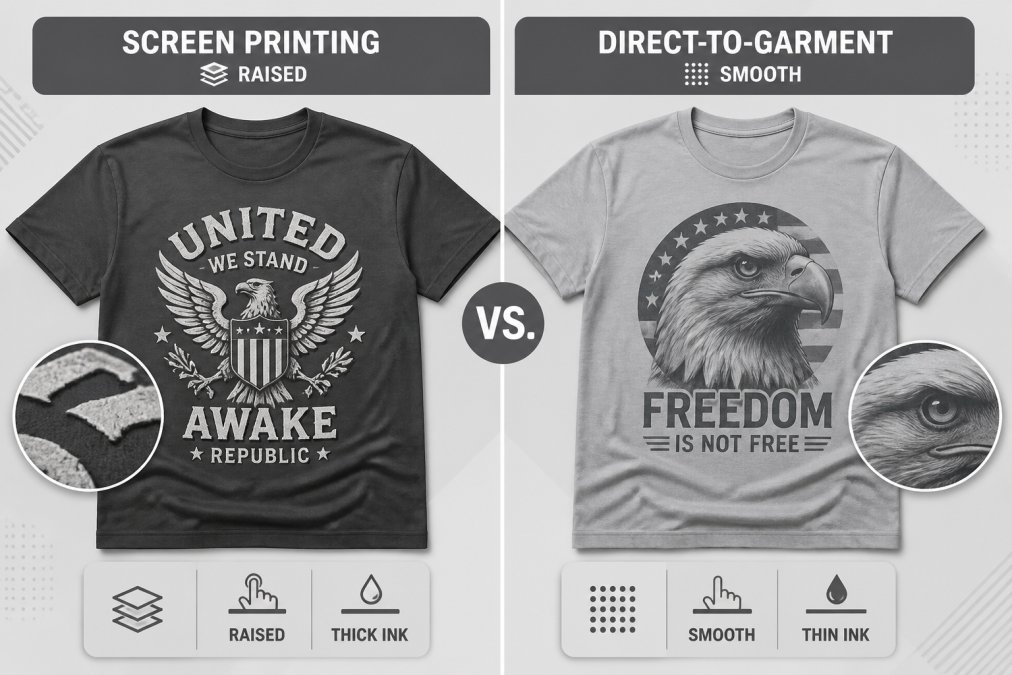
Screen printing forces ink through a mesh screen directly onto fabric, creating a raised, textured print. Quality screen printing uses plastisol or water-based inks that bond with fabric fibers. Examine a screen-printed design by running your fingers across it. Quality prints feel slightly raised and textured. Poor prints feel flat or sticky. The edges should be crisp and defined. Blurry edges indicate low-quality screens or improper curing.
Quality screen printing uses multiple color layers for complex designs. Each color requires a separate screen and pass through the printer. This labor-intensive process costs more but delivers superior results. Examine the design; does it have color depth and detail, or is it simplistic?
Direct-to-Garment Quality and Longevity
Direct-to-garment printing uses inkjet technology to spray color directly onto fabric, allowing photographic detail and unlimited colors without screen setup. However, DTG durability depends entirely on ink quality and fabric preparation. Poor DTG prints crack and fade within weeks. Quality DTG prints last for years.
Feel a DTG print by running your fingers across it. Quality DTG prints feel smooth and integrated with the fabric; the ink penetrates fibers rather than sitting on top. Examine the back of the garment; quality DTG shows minimal ink bleed-through, while poor DTG leaves heavy ink staining on the reverse side. Quality DTG processes pre-treat fabric to accept ink properly, ensuring colorfastness and durability.
Heavyweight Cotton Hoodie Quality: What to Look For
Hoodies demand different evaluation criteria than t-shirts because they endure more stress and require sustained structure. A quality hoodie maintains its shape through years of wear.
Fleece Weight and Tensile Strength
Hoodie fleece weight directly indicates quality and durability. Lightweight fleece at 200-250 GSM feels thin and provides minimal warmth. Mid-weight fleece at 250-320 GSM offers the ideal balance of warmth, weight, and breathability. Heavyweight fleece at 320+ GSM delivers maximum durability and warmth.
Tensile strength, the force required to tear fabric, correlates with fiber quality and density. Quality fleece resists tearing and maintains integrity under stress. Examine the fabric closely. Does it feel dense and substantial, or thin and fragile? The fiber composition of fleece matters. 100% cotton fleece offers superior comfort and breathability. Cotton-polyester blends add durability and reduce shrinkage while maintaining softness.
Hardware Durability: Zippers, Aglets, and Eyelets
Zippers fail more often than fabric on quality garments. A cheap zipper seizes, sticks, or separates within months. Quality zippers slide smoothly and handle repeated opening and closing. Examine the zipper pull; does it feel substantial and well-made, or cheap and flimsy? Quality zippers use metal or high-grade plastic.
Aglets, the plastic or metal tips on drawstrings, prevent fraying and allow easy threading through channels. Quality aglets are firmly attached and feel substantial. Eyelets, the metal rings where drawstrings exit the hoodie, prevent the string from tearing through fabric. Quality eyelets are properly set and feel smooth. The drawstring should slide smoothly through each eyelet without catching.
Check all hardware by testing functionality. Zippers should glide smoothly without sticking. Drawstrings should move easily through channels and eyelets. Buttons should feel secure and substantial.
How to Identify Fake Streetwear and Spot Counterfeits
The streetwear market attracts counterfeiters because legitimate pieces command premium prices. Learning to identify authentic versus counterfeit items protects your investment and ensures quality construction.
Authentication Red Flags and Quality Inconsistencies
Counterfeit items consistently show quality inconsistencies that legitimate manufacturers avoid. Examine stitching across multiple seams; legitimate manufacturers maintain consistent stitch quality throughout. Counterfeits often show variation: some seams perfectly executed, others sloppy.
Check printing consistency. Legitimate screen prints maintain even color density and crisp edges across the entire design. Counterfeits often show color variation, bleeding, or blurry edges. Examine tags and labels closely. Legitimate manufacturers invest in quality tags with clear printing and proper attachment. Counterfeit tags often show misspellings, poor printing quality, or loose attachment.
The packaging and presentation matter. Legitimate streetwear arrives in quality packaging that reflects the brand's values. Counterfeits often arrive in generic packaging or plastic bags.
Verifying Brand Heritage and Supply Chain Transparency
Legitimate streetwear brands openly discuss their supply chain and manufacturing process. They identify factories, explain production methods, and take responsibility for quality. Counterfeits rely on secrecy and vague descriptions. If a seller refuses to discuss where and how garments are made, that's a red flag.
Check for consistency in branding across all touchpoints. Legitimate brands maintain consistent logos, fonts, and design elements across tags, packaging, and marketing materials. Counterfeits often show variation. Research the brand's actual manufacturing locations and practices. Legitimate brands like Awake Republic discuss their commitment to quality and American values openly.
Verify purchase authenticity by buying directly from official sources. Legitimate brands control their distribution carefully. If a price seems too good to be true, it probably is. Counterfeits are sold at steep discounts to move volume quickly.
Assess Fit, Silhouette, and Shrinkage Expectations
Quality streetwear maintains its intended fit and silhouette through years of wear. Understand the intended silhouette before purchasing. Fitted pieces highlight body shape and work for layering. Oversized pieces create a relaxed aesthetic and work over other garments. Examine the garment on a hanger; does the silhouette match the intended design?
Shrinkage expectations differ by fabric composition. 100% cotton shrinks 3-5% in length and width with the first wash, then stabilizes. Cotton-polyester blends shrink less, typically 1-2%. Quality manufacturers account for this in sizing. Check the size chart before purchasing; quality brands provide detailed measurements and shrinkage information.
Test fit by trying garments on if possible, or review detailed sizing information from the retailer. Quality pieces fit as intended without excessive room or tightness. The armholes should sit at the natural shoulder point. Sleeves should end at the wrist bone. The hem should fall at the intended length.
Quality streetwear separates itself through measurable characteristics: fabric weight, stitching reinforcement, print durability, and hardware quality. These factors determine whether a piece becomes a wardrobe staple or a regretted purchase that falls apart after a season. Awake Republic's commitment to 100% cotton construction and original graphic designs reflects an understanding that quality begins with material selection and extends through every manufacturing detail. By applying these evaluation criteria, you'll recognize quality pieces immediately and build a wardrobe of garments that improve with age rather than deteriorate with wear.

Frequently Asked Questions
What fabric weight should I look for when buying high quality streetwear?
Look for heavyweight cotton pieces in the 200-250 GSM (grams per square meter) range for t-shirts and 300+ GSM for hoodies and fleece. Higher GSM indicates denser fabric that resists pilling, maintains shape after washing, and provides better durability. Quality streetwear brands invest in heavier cotton because it feels substantial, drapes better, and resists shrinkage more effectively than lightweight alternatives.
How can you tell if a hoodie is high quality by examining the stitching?
Examine the seams for double-needle stitching, which creates two parallel lines of thread and prevents seams from splitting. Check for taped seams inside the garment, a strip of fabric sewn over the seam that reduces fraying and increases durability. Run your finger along the stitching; it should be even, tight, and consistent. Poor quality hoodies show loose threads, uneven stitch spacing, or single-needle construction that fails after repeated washing.
What are the tell-tale signs of high-quality streetwear versus counterfeit pieces?
Authentic high quality streetwear shows consistent stitching throughout, proper label placement and stitching, and hardware (zippers, eyelets, aglets) that feels solid and functions smoothly. Counterfeits often have spelling errors on tags, loose threads, misaligned graphics, and cheap hardware that breaks quickly. Check colorfastness by examining whether the print shows even color saturation. Verify supply chain transparency, legitimate brands can trace their production origins, while fakes cannot.
Should I expect shrinkage when washing high quality streetwear?
Quality streetwear made from heavyweight cotton typically shrinks 3-5% with the first wash if not pre-shrunk. However, premium pieces often undergo garment-dyed or pigment-dyed processes that stabilize the fabric before final construction. Check product descriptions for pre-shrunk certification. Wash in cold water and air dry to minimize shrinkage. Higher GSM fabrics shrink less than lightweight alternatives because the dense weave is more stable during laundering.
This article was written using GrandRanker