
Why Graphic Tees Are Expensive: The Real Cost Breakdown
Table of Contents
- Why Graphic Tees Are Expensive: The Supply Chain Reality
- Raw Materials and Fabric Quality
- Artist Licensing, Design Rights, and the Influencer Tax
- The Retail Markup Breakdown
- How to Wash Graphic Tees to Protect Your Investment
- High Quality Graphic Tees Brands and What Sets Them Apart
- Frequently Asked Questions
Last Updated: August 27, 2026
Why Graphic Tees Are Expensive: The Supply Chain Reality
Graphic tees command premium prices for reasons extending far beyond the design printed on the front. The cost structure involves multiple layers of production, material sourcing, and brand positioning that most casual shoppers never consider. At Awake Republic, the commitment to original designs and high-quality construction means every shirt reflects genuine production costs rather than artificial markups. When buyers question the price of a well-made graphic tee, they're often unaware that they're paying for fabric quality, design licensing, and sustainable supply chain management. The gap between a $5 mass-produced shirt and a $20 thoughtfully constructed piece represents real differences in material durability, printing technique, and brand integrity.
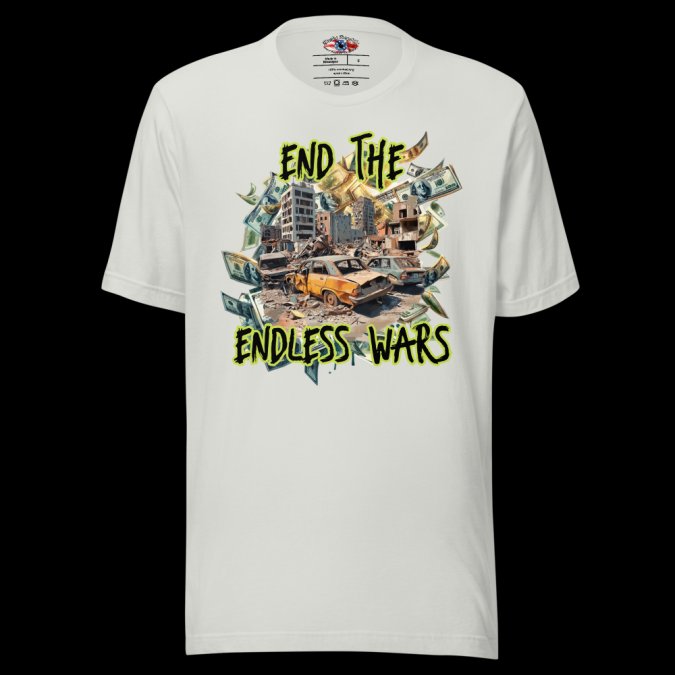
Awake Republic® End The Endless Wars T-Shirt - 100% Cotton Libertarian Streetwear
The following breakdown reveals exactly where the cost of graphic tees actually goes, and why cutting corners in any area compromises the final product.
Raw Materials and Fabric Quality
The foundation of any quality graphic tee begins with the blank garment itself. Premium cotton sourcing represents one of the largest single costs in production, and the difference between cheap and quality fabric is immediately apparent to anyone who's owned both.
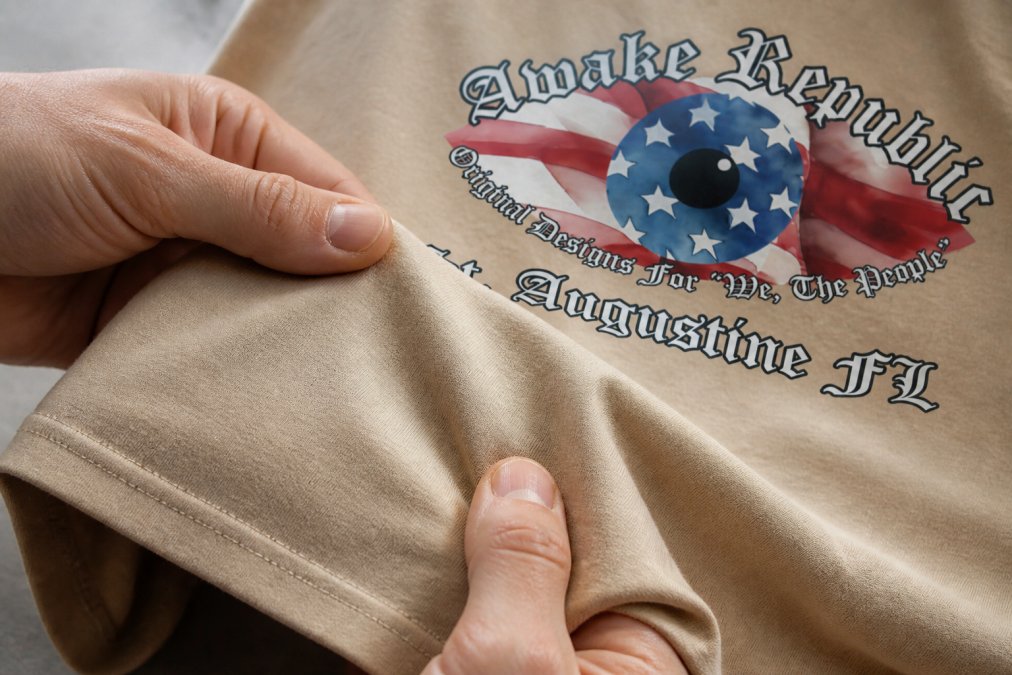
Close-up premium combed and ring-spun cotton fabric, showing fine texture and weave detail with natural lighting highlighting fabric quality
High-quality graphic tees typically use combed and ring-spun cotton rather than standard cotton. This process removes short fibers and impurities, creating a softer, more durable final product. Garment weight, measured in ounces per square yard (oz/yd²), directly correlates with longevity. A premium blank often weighs 4.2 oz/yd² or higher, compared to 4.0 oz/yd² or less for budget alternatives. This seemingly small difference translates to noticeably thicker fabric that resists pilling, fading, and deterioration through repeated washing.
Cotton prices fluctuate based on global supply, weather conditions, and market demand. Brands committed to quality refuse to switch to lower-grade materials simply to maintain artificial pricing, which means their costs genuinely increase with commodity prices.
Quality manufacturers pre-shrink fabric to prevent the frustrating experience of a shirt shrinking after the first wash. This process requires additional machinery, water, and labor, costs that cheap manufacturers skip entirely.
Beyond cotton, construction details matter. Side-seamed construction (versus the cheaper tube-seam method) provides better shape retention and durability. Shoulder-to-shoulder taping reinforces the neckline, preventing stretched-out, misshapen collars. These details directly impact how long a shirt remains wearable.
Artist Licensing, Design Rights, and the Influencer Tax
Original graphic designs carry intellectual property costs that mass-produced generic designs avoid entirely. When a brand commissions original artwork or licenses designs from independent artists, licensing fees become part of the product cost.
Independent artists deserve compensation for their creative work. A brand licensing an original design pays the artist an upfront fee plus ongoing royalties per unit sold. This arrangement ensures designers are fairly compensated and incentivizes quality artwork.
The "influencer tax" represents an increasingly significant cost factor. Brands partnering with social media personalities for design collaborations or endorsements pay influencer fees that get baked into product pricing. These costs flow directly to the consumer through higher prices.
Design authenticity carries premium pricing. Original, thought-provoking designs that spark conversation command higher prices than generic templates. The design process, research, sketching, refinement, testing, represents labor costs that generic designs don't incur.
Limited edition drops create perceived value that supports higher pricing. When a design runs for a limited time only, the exclusivity justifies premium pricing. Customers understand they're paying for access to something not perpetually available.
The Retail Markup Breakdown
Understanding retail markup reveals why graphic tees cost what they do at the point of sale. The markup structure accounts for multiple layers of business operations beyond the manufacturing cost.
The cost of goods sold (COGS), the actual production cost of the shirt, typically represents 30-40% of the retail price for quality brands (sba.gov).
Direct-to-consumer brands like Awake Republic skip the wholesale layer, which theoretically allows lower prices. However, direct sales involve different costs: digital marketing, customer service infrastructure, payment processing, packaging, and shipping.
Brand positioning and perceived value influence retail pricing. A brand with strong recognition and reputation can command higher prices than an unknown competitor with identical products. This pricing power reflects brand-building investments: marketing, design quality, customer experience, and brand storytelling.
Overhead costs include design development, customer service, returns processing, and administrative expenses. Quality brands absorb these costs as part of doing business, which increases the per-unit price necessary to maintain profitability.
A healthy profit margin allows brands to reinvest in product quality, design innovation, and customer experience improvements. A $20 graphic tee represents a complex ecosystem of costs and margins, not a simple markup on production expense.
How to Wash Graphic Tees to Protect Your Investment
Wash in cold water and avoid high heat. Hot water breaks down both fabric fibers and ink bonds, accelerating fading and deterioration (the FTC). Turn the shirt inside-out before washing to protect the printed graphic from direct friction with other garments.
Use gentle wash cycles rather than heavy-duty settings. A delicate or permanent-press cycle provides adequate cleaning without excessive agitation that damages fabric and graphics.
Avoid chlorine bleach and oxygen-based bleach products. Both break down fabric fibers and fade printed designs. If stain treatment is necessary, use targeted spot-cleaning with mild detergent.
Line-drying or air-drying preserves both fabric and graphics better than machine drying. The high heat of dryers accelerates fading, causes shrinkage, and weakens fabric fibers. If machine drying is necessary, use the lowest heat setting.
Avoid direct sunlight during drying when possible. Prolonged UV exposure fades graphics over time.
Store graphic tees flat or folded rather than hanging. Hanging causes stretching and distortion over time. Quality graphic tees like those from Awake Republic, with premium cotton construction and durable screen printing, reward proper care with years of wearability.
High Quality Graphic Tees Brands and What Sets Them Apart
Premium graphic tee brands distinguish themselves through consistent quality across multiple dimensions. Understanding what separates quality brands from mass-market alternatives helps justify the price premium.
Fabric sourcing represents the first differentiator. Quality brands specify combed and ring-spun cotton with minimum garment weights (typically 4.2 oz/yd² or higher). They maintain relationships with specific mills to ensure consistency and quality control.
Design originality sets premium brands apart. Original designs commissioned from independent artists or created by in-house design teams reflect thoughtfulness and creativity. Brands like Awake Republic invest in original design work that provokes thought and sparks conversation, positioning graphic tees as vehicles for self-expression rather than generic apparel.
Printing technique quality varies dramatically. Premium brands invest in screen printing with high-quality inks and proper curing processes, producing graphics that remain vibrant through extended wear.
Construction details matter more than most consumers realize. Reinforced seams, shoulder-to-shoulder taping, side-seamed construction, and pre-shrunk fabric all contribute to durability. Premium brands include these details as standard.
Customer service and returns policies reflect brand confidence in quality. Brands offering hassle-free returns and responsive customer support demonstrate confidence that customers will be satisfied.
Awake Republic distinguishes itself through original graphic designs that celebrate American independence and individual expression, combined with premium construction standards. The commitment to 100% combed and ring-spun cotton (4.2 oz/yd² fabric weight), side-seamed construction, and shoulder-to-shoulder taping reflects genuine quality investment. Each design provokes thought and sparks conversation, positioning the graphic tee as more than casual apparel but as a statement of values and independence.
The price of quality graphic tees reflects genuine production costs across materials, manufacturing, design, and distribution. Understanding this cost structure transforms the perception of premium pricing from arbitrary markup to justified investment. A well-made graphic tee from a brand like Awake Republic represents thoughtful design and durable construction. When customers recognize they're paying for authentic quality rather than brand hype, the value proposition becomes clear.
Frequently Asked Questions
Q: What factors contribute to the price of a graphic t-shirt?
A: Graphic tee pricing reflects multiple cost layers: premium cotton (typically 4.2 oz./yd² weight for durability), printing technique (screen printing or direct-to-garment), labor and ethical manufacturing standards, artist licensing fees, and retail markup. A $19.99 graphic tee like Awake Republic's pieces factors in pre-shrunk fabric, side-seamed construction, and shoulder-to-shoulder taping. The final price represents cost of goods sold plus profit margin, not just the design.
Q: How can you tell if a graphic tee is high quality?
A: High quality graphic tees brands prioritize garment weight (look for 4.2 oz./yd² or higher), fabric construction (combed and ring-spun cotton resists pilling), and print durability. Check for side-seamed construction and shoulder-to-shoulder taping, which reduce stress on seams. Examine how the graphic is applied—screen printing on premium blanks lasts longer than plastic ink on cheap fabric. Pre-shrunk fabric prevents unwanted size changes. Awake Republic's pieces combine these elements with original graphic designs that maintain quality through proper washing techniques.
Q: Is a $40 graphic tee worth the investment?
A: Yes, if it meets durability standards. A $40 graphic tee should use premium blanks (4.2 oz./yd² cotton minimum), quality printing that resists cracking and fading, and ethical manufacturing practices. Compared to fast-fashion alternatives that fade or tear quickly, premium graphic tees justify higher upfront cost through longevity. Original designs and limited edition drops add brand equity and resale value. Awake Republic's $19.99 pieces offer entry-level quality with professional construction, while higher-priced options in the market reflect artist royalties, exclusive designs, and sustainable production methods.