

How do you layer streetwear for cold weather?
Last Updated: October 24, 2026
Quick Summary
To layer streetwear for cold weather, use a three-layer system: a fitted, moisture-wicking base layer against your skin, an insulating middle layer like a hoodie or sweater that traps heat, and a wind- and rain-blocking outer layer such as a jacket. This approach keeps you warm without the bulk of a single heavy coat.
- Base layers should fit snugly and be made from merino wool blends, synthetics, or moisture-wicking cotton to pull sweat away from your skin.
- Choose a hoodie with regular or slightly tapered fit and 8 oz fabric weight for layering under a jacket without excessive bulk.
- Your jacket's chest should be 2-4 inches wider than your hoodie's chest to accommodate layers without looking oversized.
- Match sleeve lengths carefully: hoodie sleeves should end at your wrist bone, and base layer sleeves should cover your forearms to prevent gaps.
- Avoid cotton as a middle layer in wet conditions; synthetic fleece and wool retain warmth better when damp.
Table of Contents
- Understanding the Three-Layer System for Cold Weather
- How to Layer a Hoodie Under a Jacket
- Building Winter Streetwear Outfits
- Winter Layering Without Bulk
- Combining Textures and Colors for Visual Depth
- Common Mistakes to Avoid When Layering
- Getting Started with Your Cold-Weather Streetwear Wardrobe
- Frequently Asked Questions
Understanding the Three-Layer System for Cold Weather
The foundation of layer streetwear cold weather is the three-layer system: a moisture-wicking base layer, an insulating middle layer, and a wind- and rain-blocking outer layer. Together they create a layer streetwear cold weather setup that keeps you warm without the bulk of one heavy coat. The base pulls sweat from your skin, the middle holds heat close, and the outer shields you from the elements.
Base Layer: Lightweight Foundation
Your base layer sits against your skin and moves moisture outward, keeping you dry and preventing chilling. Choose merino wool blends, synthetics like polyester or nylon, or moisture-wicking cotton blends. Base layers should fit snugly without restricting movement; loose ones bunch under middle layers. Choose long sleeves in winter to cover your arms completely.
Middle Layer: Insulation and Warmth
This is where most of your warmth comes from. The middle layer traps air, and trapped air holds heat. Hoodies, sweaters, and knitwear excel at this job.
Fleece is lightweight, compressible, and warm; wool insulates even when wet; synthetics are affordable and easy to care for. Choose something that doesn't add excessive bulk to your silhouette.
Outer Layer: Protection and Style
Your outer layer blocks wind and moisture and defines your outfit's aesthetic, typically a jacket, puffer vest, or technical shell. It should fit loose enough to accommodate layers beneath without looking puffy: too large swallows your silhouette, too tight restricts movement and looks awkward over layers.
How to Layer a Hoodie Under a Jacket
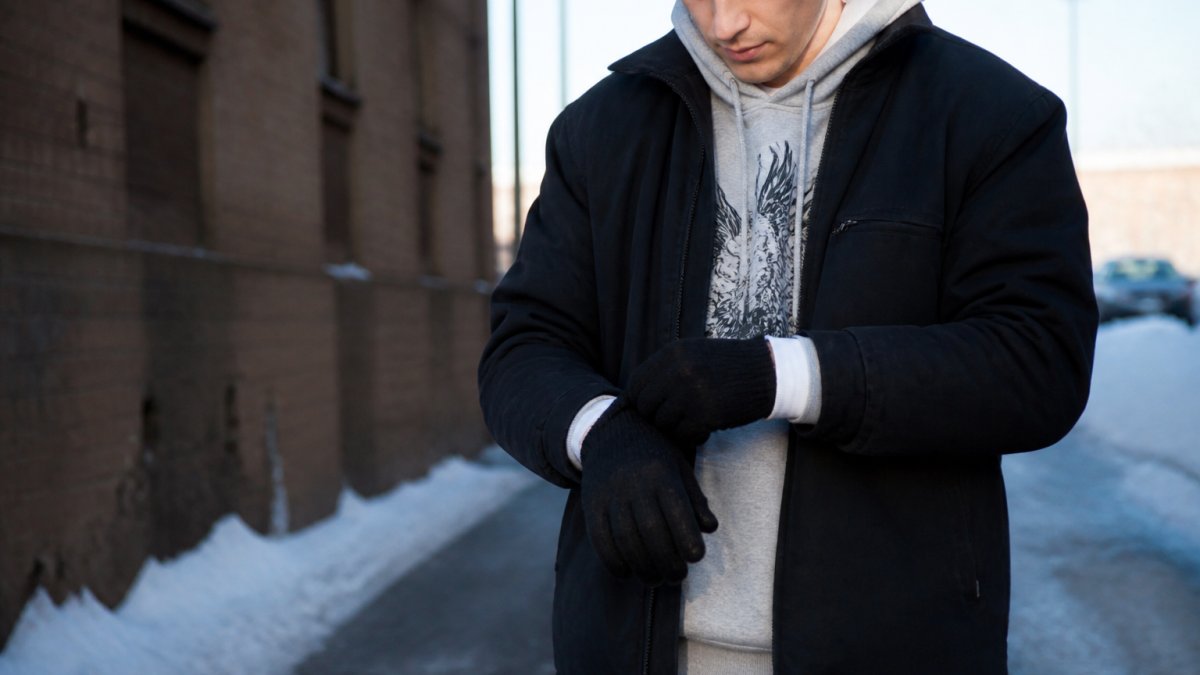
Hoodie layering is central to streetwear cold-weather style: a hoodie works as a middle layer under a jacket or as a standalone outer layer, depending on temperature and look.
Choosing the Right Hoodie Fit
Fit determines how your layers look together: too large bunches under a jacket, too small restricts movement.
For layering under a jacket, choose a hoodie with a regular or slightly tapered fit.
Hoodie sleeves should end at your wrist bone: long sleeves bunch under a jacket, short sleeves leave gaps that let cold air in.
Jacket Selection and Proportions
Your jacket must accommodate the hoodie without looking oversized, which is where proportion control matters. A fitted or slim-fit jacket works best over a hoodie; oversized jackets can work with intentional styling and fitted layers underneath. The jacket's chest should be 2-4 inches wider than your hoodie's chest measurement. Jacket length matters too: a hip-length jacket works with most hoodie lengths, while longer jackets overwhelm a fitted hoodie.
Building Winter Streetwear Outfits
Temperature-Based Outfit Formulas
Different temperatures require different layer combinations. The ranges below assume moderate wind and dry conditions; adjust upward for wind chill or precipitation.
45-55°F (7-13°C):
- Fitted long-sleeve base layer (merino or synthetic)
- Lightweight hoodie, crewneck sweatshirt, or overshirt
- Lightweight jacket, coach jacket, or unlined bomber
- Straight-leg or relaxed jeans, or technical pants
- Low-top sneakers with wool-blend socks
- Optional: beanie or cap
30-45°F (-1-7°C):
- Fitted long-sleeve base layer
- Midweight hoodie (8-10 oz fleece) or sweater
- Insulated jacket, lined bomber, or puffer vest over hoodie
- Jeans or technical pants; add a thermal base layer under pants if you run cold
- Mid-top sneakers or insulated boots with wool socks
- Beanie and gloves
Below 30°F (below -1°C):
- Fitted long-sleeve base layer plus thermal bottom
- Midweight hoodie
- Heavyweight puffer coat or insulated shell
- Fleece-lined or thermal pants, or jeans over a thermal base
- Insulated boots with wool or synthetic socks
- Full winter accessories (beanie, gloves, scarf or neck gaiter)
The key is adding layers, not thickening existing ones: a proper outer layer warms you more than a thicker hoodie, and layering lets you adjust as activity changes.
Wind, Rain, and Time-Outdoors Adjustments
Temperature alone doesn't determine comfort. Wind strips heat from exposed skin and pushes cold air through loosely woven fabrics.
Windy conditions: Add a wind-resistant outer shell over your insulating layer.
Rain or wet snow: Choose a water-resistant or waterproof outer layer with sealed seams.
Long periods outdoors (over 30 minutes): Layer more generously than for a short commute.
Short commutes or intermittent indoor-outdoor transitions: Favor layers you can remove quickly.
Activity-Specific Combinations
Your activity level affects how much heat you generate and ventilation you need.
Casual walking or commuting: Focus on comfort and style, and layer for the temperature rather than exertion.
Active sports or running: Use thinner, moisture-wicking layers and avoid over-layering.
Stationary activities (waiting, watching, socializing): Layer more generously. You're not moving enough to generate body heat, so a full three-layer system is appropriate even at moderate temperatures.
Lower-Body and Footwear Layering
Most layering guides stop at the waist. In real cold, your legs and feet determine whether you're comfortable.
Pants: Jeans work down to about 40°F for most people.
Socks: Wool and synthetic blends wick moisture and insulate better than cotton, which holds sweat against your skin and accelerates chilling.
Footwear: Low-top sneakers are fine in dry, mild cold.
Ankles and wrists: These are heat-loss points. Tapered cuffs, high-top sneakers, and boots that cover the ankle reduce drafts and keep the silhouette clean.
Awake Republic® Respect The Locals Unisex Zip Hoodie →
Winter Layering Without Bulk
The biggest challenge in streetwear layering is staying warm without looking wrapped in blankets. Bulk destroys silhouette, and streetwear depends on clean lines and intentional proportions. The solution is understanding how fabrics perform, not just how thick they are.
Fabric Weight, Loft, and Insulation
Lighter fabrics solve the bulk problem when chosen for insulation efficiency rather than thickness. Learn which hoodie materials work best for layering. A 6-8 oz fleece hoodie provides more warmth than a 12 oz sweatshirt while taking up half the space because fleece traps air in a lofted structure. Merino wool is denser than synthetic fleece, so it delivers warmth in thinner profiles.
Moisture Management and Breathability
Breathability is about moving moisture vapor away from your body before it condenses and chills you. Moisture-wicking fabrics pull sweat away from your skin, keeping you warm even when active.
Textile research on moisture management in layered systems shows that breathable middle layers reduce the need for thicker outer layers.
A common pattern pairs a moisture-wicking base layer with a breathable midlayer and a wind-resistant shell: the base moves sweat, the midlayer insulates, and the shell blocks wind without sealing in moisture.
Wind Resistance and Air Permeability
Wind strips heat from your body faster than still air, and a tightly woven nylon or polyester shell blocks it far better than a knit hoodie alone. Lower air permeability means better wind resistance but potentially less breathability; a wind-resistant shell over a breathable midlayer balances protection and comfort.
Silhouette and Proportion Control
Maintain your silhouette by matching layer proportions. If your base layer is fitted, your middle layer should be slightly looser. Your outer layer can be oversized, but only if the layers beneath are controlled.
Avoid mixing too many widths. A fitted base layer, a fitted hoodie, and an oversized jacket works, as does a fitted base layer, fitted hoodie, and fitted jacket.
Taper your layers toward your wrists and ankles: tight cuffs make the bulk above them look intentional rather than accidental.
Combining Textures and Colors for Visual Depth
Layering creates opportunities for texture and color play: multiple fabrics in one outfit add visual interest without adding bulk.
Pair smooth fabrics with textured ones. Learn how to wear bold pieces with confidence when combining textures and colors in your layered outfits.
Color coordination matters in streetwear. Neutral base layers (black, gray, white) work under any color hoodie or jacket.
Consider what shows. Your base layer's neckline will be visible above your hoodie. Your hoodie's sleeves will show below your jacket.
According to fashion design principles in contemporary streetwear, layering that reveals intentional color and texture combinations signals intentional styling rather than random bundling.
Common Mistakes to Avoid When Layering
Streetwear layering has predictable failure points. Avoiding these mistakes keeps your outfits looking sharp.
Oversized base layers. A loose base layer bunches under tighter layers and creates uncomfortable lumps.
Mismatched sleeve lengths. Hoodie sleeves that extend past your wrist bone create bunching under jackets.
Too many layers at once. Adding more layers doesn't always mean more warmth.
Ignoring proportions. An oversized hoodie under an oversized jacket creates a formless silhouette.
Watch out: Choosing a hoodie one size larger "for layering" usually backfires.
Getting Started with Your Cold-Weather Streetwear Wardrobe
Building a cold-weather streetwear wardrobe means investing in versatile pieces that layer well together. Start with basics, then add statement pieces.
Begin with fitted base layers in neutral colors. Black, gray, and white work under anything.
Add 2-3 hoodies in neutral colors and one in a statement color or with a bold graphic. The EXTERNAL_LINK: Awake Republic Respect The Locals Unisex Zip Hoodie combines a 50/50 cotton-polyester blend with thoughtful construction, the 8 oz fabric weight provides warmth without bulk, and the regular fit works well under jackets for intentional cold-weather layering.
For outer layers, choose jackets that fit your frame without overwhelming it.
Add accessories strategically.
Sustainable fashion guidance on building long-lasting wardrobes suggests investing in quality pieces over quantity.
Practice layering with different combinations. The formulas above are starting points, not rules.
Frequently Asked Questions
What are the three layers for cold-weather streetwear?
The foundation is a lightweight base layer (fitted long-sleeve tee or thermal shirt) that pulls moisture away. The middle layer provides insulation—typically a hoodie, sweater, or knitwear that traps warmth. The outer layer is your jacket or coat that blocks wind and moisture. This three-layer system lets you adjust warmth by removing or adding pieces without overheating or losing style.
How do you layer a hoodie under a jacket without looking bulky?
Choose a hoodie that fits snugly through the shoulders and chest. The key is proportion contrast: if your hoodie is fitted, your jacket should have a relaxed cut. Avoid two oversized pieces stacked together.
What fabrics work best for winter layering without adding bulk?
Lightweight, breathable fabrics layer better than heavy ones. Cotton-polyester blends (like the 50/50 construction in quality hoodies) compress well while providing warmth and durability. Avoid stacking multiple thick materials; instead, choose mid-weight pieces with good insulating properties.
How do I know if my winter streetwear layering will actually stay warm?
Test your layers in transitional temperatures first—early fall or late spring—to see how the system performs before winter arrives. Ensure your base layer fits snugly to trap warm air, your middle layer provides genuine insulation (wool, fleece, or quality knitwear), and your outer layer blocks wind. If you feel cold within 30 minutes of being outside in typical cold weather, add a thicker middle layer or choose a more insulating outer jacket next time.
Cold-weather streetwear doesn't require expensive gear or excessive layering. It requires understanding how layers work together and choosing pieces that fit your frame. Start with the three-layer system, focus on proportions, and build outfits around quality basics. Awake Republic's collection of hoodies and streetwear provides the pieces you need to execute this approach, bold, thoughtfully constructed apparel that works as hard as you do in cold weather.
