
Best Fabrics for High Quality Streetwear Hoodies
Table of Contents
- What Makes a Hoodie Fabric Premium
- Cotton, Polyester, and Cotton-Polyester Blends: Fabric Composition Matters
- French Terry vs Fleece for Hoodies: Construction and Feel
- Durability Factors: Shrinkage, Pilling, and Colorfastness
- Fabric Selection for Printing, Embroidery, and Customization
- Fabric Selection Matrix by Season and Activity
- Frequently Asked Questions
Last Updated: October 20, 2026
What Makes a Hoodie Fabric Premium
Premium hoodie fabrics share three core characteristics: durability through construction quality, comfort through fiber selection, and performance across repeated wear and washing. The difference between a hoodie that lasts two seasons and one that survives five years comes down to fabric weight, fiber composition, and how the yarn is spun.
Awake Republic LLC sources hoodies with these specifications in mind. Their Propaganda-Aid Pullover Hoodie combines a 100% cotton face with a cotton-polyester blend backing, creating a fabric that breathes on the outside while maintaining warmth. This hybrid construction is a hallmark of quality streetwear.

Cotton, Polyester, and Cotton-Polyester Blends: Fabric Composition Matters
Fiber content determines how a hoodie feels, breathes, and ages. Pure cotton offers softness and breathability but shrinks easily and pills with friction. Polyester adds durability and colorfastness but can feel stiff if the blend isn't balanced. The best fabrics for high quality streetwear hoodies typically combine both fibers strategically.
100% Cotton Face with Blend Backing
A 100% cotton face paired with a cotton-polyester blend backing creates the ideal streetwear construction. The outer layer delivers that soft, natural hand feel customers expect. The backing, typically 50-65% cotton and 35-50% polyester, resists pilling and maintains shape through multiple wash cycles.
This construction reduces shrinkage compared to 100% cotton while preserving breathability. Awake Republic's We The People 250 Hoodie uses this exact approach: 100% cotton face with a cotton-polyester blend backing. The result is a fabric that softens with wear rather than deteriorating.

Ring-Spun Cotton Blends
Ring-spun cotton is twisted tighter during production, creating stronger, smoother yarn with fewer loose fibers. This reduces pilling significantly compared to standard cotton yarn. A 65% ring-spun cotton, 35% polyester blend delivers the softness of cotton with the durability polyester provides.
Awake Republic's We Don't Deserve Dogs Unisex Hoodie and End The Endless Wars Unisex Hoodie both feature 65% ring-spun cotton with 35% polyester. Ring-spun construction adds cost but extends the hoodie's lifespan by resisting both shrinkage and surface degradation. The trade-off is minimal, most quality streetwear brands now use ring-spun cotton as standard.
Recycled Polyester Options
Recycled polyester reduces environmental impact while maintaining performance characteristics. A 96% recycled polyester blend with 4% elastane (for stretch) creates a fabric that resists wrinkles and maintains color through washing. This composition is lighter than traditional cotton blends, making it ideal for layering or warmer climates.
Awake Republic's We The People 250 Recycled Zip Hoodie uses this specification. The fabric carries Global Recycled Standard (GRS) certification, verifying that the recycled content is legitimate. Recycled polyester performs similarly to virgin polyester in terms of durability and colorfastness but appeals to buyers prioritizing sustainability.
French Terry vs Fleece for Hoodies: Construction and Feel
French terry and fleece both create soft, warm interiors but through different knit structures. Understanding the difference helps buyers predict how a hoodie will perform over time.
French Terry Structure and Benefits
French terry is a knit fabric with uncut loops on the back side, creating a soft, absorbent interior. The front remains smooth, ideal for printing or embroidery. French terry breathes better than fleece because the loops don't trap heat as aggressively. This makes it versatile across seasons.
French terry resists pilling better than standard jersey but can still pill with friction in high-wear areas like cuffs and collar. The fabric softens with washing, which appeals to buyers who value that broken-in feel. For streetwear hoodies meant to be worn frequently, French terry offers a good balance of comfort and durability.
Fleece Performance and Durability
Fleece is a brushed knit or woven fabric with a fuzzy, plush interior. It's warmer than French terry because the brushed surface traps more air. Fleece-backed hoodies feel luxurious immediately but can pill more easily, especially in lower-quality constructions.
Air-jet spun yarn reduces pilling in fleece significantly. Awake Republic's Datsun 240Z Streetwear Zip Hoodie and Respect The Locals Unisex Zip Hoodie both use soft fleece fabric inside and outside with air-jet spun yarn. This construction minimizes surface degradation while maintaining the plush feel fleece is known for.
Fleece holds color better than French terry and resists fading through washing. The trade-off: fleece is less breathable, making it less suitable for active wear or warmer climates. For a hoodie meant primarily as outerwear in cold weather, fleece is the stronger choice.
Awake Republic® Propaganda-Aid Pullover Hoodie(Cotton/Polyester Blend) →
Durability Factors: Shrinkage, Pilling, and Colorfastness
Three specific durability metrics separate hoodies that last from those that degrade quickly: shrinkage patterns, pilling resistance, and how well the fabric retains color and print quality.
Shrinkage occurs most dramatically in 100% cotton hoodies, expect 3-5% shrinkage in the first wash if the cotton isn't pre-shrunk. Blends shrink less because polyester doesn't shrink. A 65% cotton, 35% polyester blend typically shrinks 1-2% maximum.
Pilling happens when surface fibers break and ball up on the fabric exterior. It's cosmetic but signals that the hoodie is degrading. Ring-spun cotton reduces pilling compared to standard cotton. Fleece with air-jet spun yarn resists pilling far better than standard fleece.
Colorfastness determines whether printed graphics and dyed fabric retain their appearance. Polyester holds color better than cotton because synthetic dyes bond more permanently to polyester fibers. A cotton-polyester blend balances natural feel with reliable color retention. Reactive dyes, used on quality streetwear, produce richer colors and better colorfastness than cheaper pigment-based dyes.
Fabric Selection for Printing, Embroidery, and Customization
The best fabrics for high quality streetwear hoodies must support decoration without distortion. Fabric weight, knit structure, and fiber composition all affect how printing and embroidery perform.
For screen printing, a smooth front surface is essential. French terry works well because the back is looped while the front is flat. Fleece-backed hoodies with a smooth front also accept printing cleanly.
Embroidery requires stable fabric that won't pucker around stitches. A 280+ GSM blend with adequate polyester content (40%+) holds embroidery stitches without distortion. Pure cotton is too soft for detailed embroidery; polyester blend is necessary for precision work. Ring-spun cotton adds strength, allowing for higher stitch counts without damage.
For all-over printing (print covering the entire hoodie), a slightly lighter weight works better because the ink adds stiffness. A 250-280 GSM fabric accepts all-over print without becoming overly rigid. Awake Republic's We The People 250 Recycled Zip Hoodie, at 308 GSM, is heavy enough to support the all-over print design while maintaining drape.
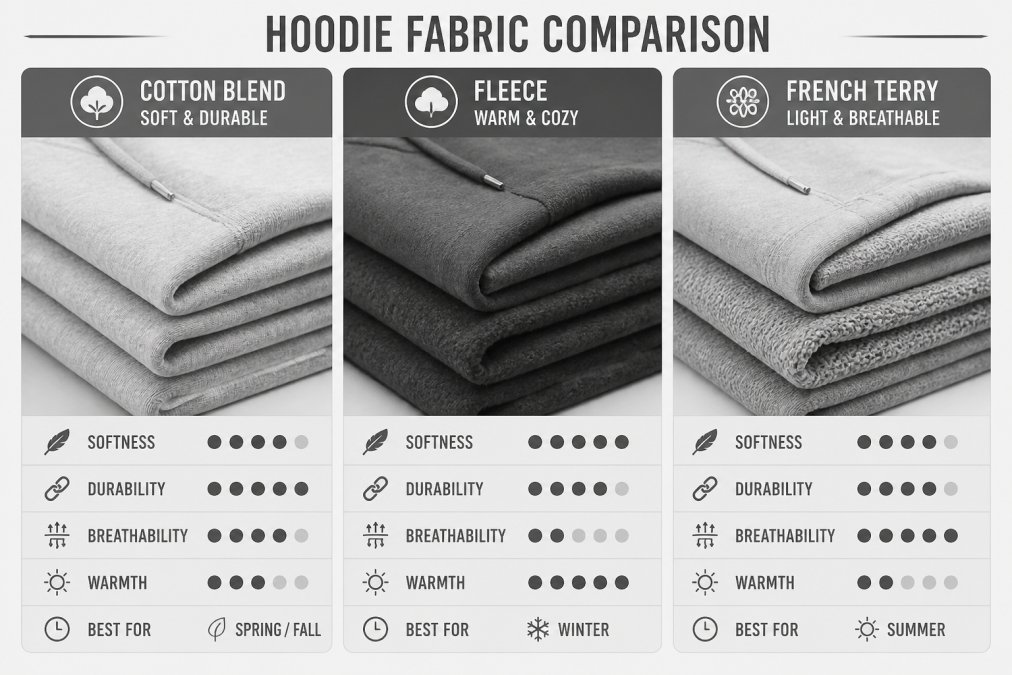
Fabric Selection Matrix by Season and Activity
Different seasons and activities demand different fabric specifications. This matrix helps match hoodie fabric to intended use.
Frequently Asked Questions
Is 100% cotton better than a cotton-polyester blend for hoodies?
Both have distinct advantages. 100% cotton offers superior breathability and softness but shrinks more and pills faster. Cotton-polyester blends (typically 65% cotton, 35% polyester) provide better shape retention, reduced shrinkage, and improved durability while maintaining comfort. For best fabrics for high-quality streetwear hoodies, blends often outperform pure cotton because they balance softness with longevity and resist wear from printing or embroidery.
What is French Terry vs. fleece for streetwear?
French Terry features a smooth face and looped backing, offering a refined appearance and softer hand feel ideal for graphic-heavy designs. Fleece (brushed on both sides) provides superior warmth and a plush texture but can pill more easily. French Terry suits statement pieces where design clarity matters; fleece works better for winter wear and high-activity use. Quality streetwear often uses French Terry for its premium aesthetic.