
How to Prevent Graphic Print Cracking
Table of Contents
Last Updated: August 16, 2026
Why Do Screen Prints Crack
Screen printed graphics crack for specific reasons rooted in how ink bonds to fabric and how garments are treated after production. Understanding these failure points is the first step to prevent graphic print cracking and extending the life of your apparel.
Screen printing involves forcing plastisol ink through a mesh screen onto fabric, where the ink sits on the surface rather than absorbing into fibers like dye does. This fundamental difference explains why screen prints are vulnerable to cracking. The ink forms a layer that must remain flexible as the garment stretches, shrinks, and moves with wear. When that flexibility is compromised, the ink fails.
Thermal Stress and Mechanical Damage
Heat is the primary culprit behind print failure. Screen printed garments are cured at specific temperatures to set the ink properly. If a shirt is then exposed to excessive heat during washing or drying, the ink becomes brittle. High temperatures cause the fabric to expand and contract at a different rate than the plastisol ink, creating stress at the bond line. Over time, this thermal cycling weakens the ink's adhesion to the fabric surface.
Mechanical stress compounds the problem. Tumble drying creates friction between garments, and aggressive washing cycles agitate the fabric intensely. The print flexes and bends with each movement. When the ink loses flexibility due to improper curing or heat exposure, it cracks instead of stretching with the fabric.
A common mistake is assuming all graphic tees are created equal. The quality of the initial screen printing process matters enormously. If the ink wasn't cured at the correct temperature or for the right duration, the bond is already compromised before the shirt ever reaches the customer. This is why investing in quality apparel from brands that control their production process, like Awake Republic's original graphic designs, which use direct to garment (DTG) printing technology on t-shirts and sublimation on all-over print garments.

Ink Bond Failure and Curing Issues
The plastisol ink used in screen printing must be cured properly to create a durable bond with the fabric. Curing involves exposing the ink to heat, typically between 320-330°F, for a specific duration. If the curing process is rushed or the temperature is too low, the ink doesn't fully cross-link with the fabric fibers. The result is a weak bond that fails quickly.
Water hardness also affects ink adhesion in ways many people overlook. Hard water contains minerals that can interfere with the washing process and leave residue on fabric. This residue can weaken the ink bond over time. Using water softeners or selecting detergents formulated for hard water helps maintain print integrity.
Detergent choice directly impacts how long a screen printed graphic survives. Harsh detergents with heavy surfactants and bleach break down the plastisol ink. Fabric softeners, despite their name, actually coat the fabric and can separate the ink from the garment surface. Choosing mild detergents specifically formulated for delicate fabrics preserves the ink bond.
How to Wash Screen Printed Shirts
Washing technique is where most people inadvertently damage their graphic tees. The goal is to clean the garment while minimizing agitation and heat exposure that stresses the print.
Temperature and Cycle Selection
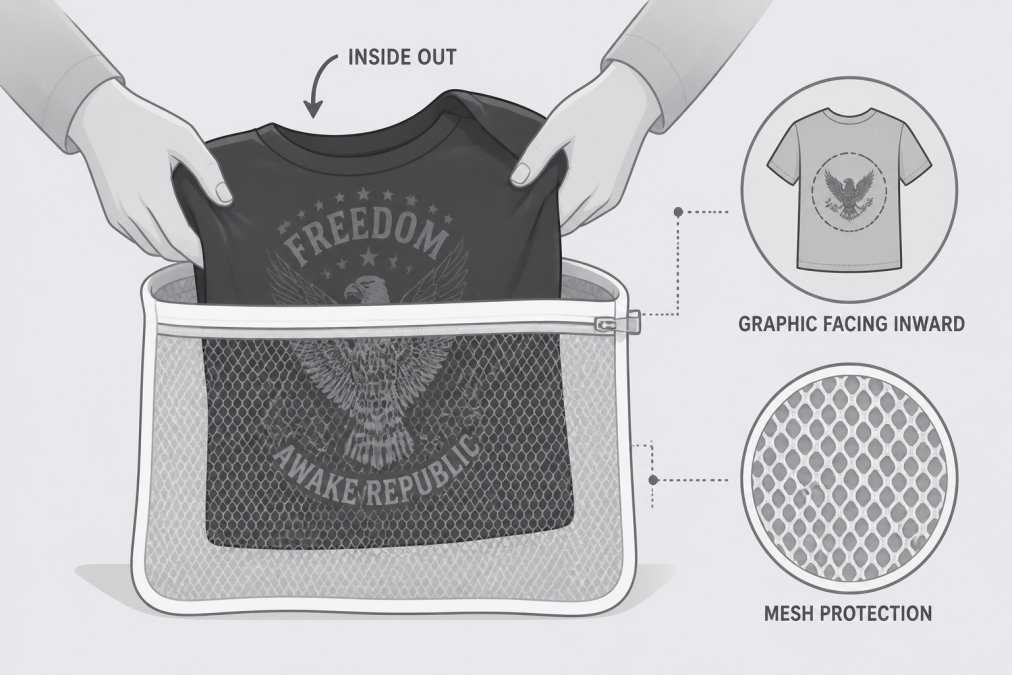
Cold water is non-negotiable when washing screen printed apparel. Cold water prevents the thermal stress that makes ink brittle and vulnerable to cracking. Hot or even warm water accelerates the breakdown of the plastisol ink bond. The colder the water, the better the print survives repeated washing.
The washing cycle matters as much as temperature. A gentle cycle minimizes agitation, which is critical because mechanical stress causes prints to flex and crack. Gentle cycles use slower drum rotation and less water movement, reducing friction between garments. A standard or heavy cycle is too aggressive for screen printed shirts.
Wash load size affects how much agitation your graphic tee experiences. Overloading the machine increases friction between garments. Conversely, washing a single item creates unnecessary movement in an empty machine. A moderate load, roughly half to three-quarters full, provides enough buffer without excessive agitation.
Detergent and Chemical Avoidance
Mild detergents are essential for screen printed graphics. Look for products labeled "delicate" or "gentle" and avoid anything labeled "heavy-duty" or "extra-strength." These formulations contain fewer harsh surfactants that break down ink bonds. Liquid detergents are generally gentler than powders, which can leave residue on fabric.
Bleach is poison for screen printed graphics. Bleach chemically breaks down the plastisol ink, causing it to fade and deteriorate. Never use chlorine bleach on any screen printed garment, regardless of the color. Even oxygen-based bleach alternatives can damage prints over time.
Fabric softeners create a coating on fabric that separates the ink from the garment surface. This separation weakens the bond and accelerates cracking. Skip fabric softeners entirely for screen printed apparel. If you want softer-feeling clothing, use a dryer ball instead, which provides mechanical softening without chemical coatings.
Safe Ironing Practices for Screen Printed Graphics
Ironing is a common secondary cause of graphic print cracking that most care guides overlook. If your screen printed shirt needs pressing, improper ironing technique can melt or crack the ink in seconds.
Never iron directly over the graphic. The heat and pressure from an iron can melt plastisol ink, fuse it to the iron plate, or cause it to crack as it cools unevenly. If you must iron a screen printed shirt, follow these protocols:
- Iron the back side only. Turn the shirt inside out and iron the reverse side of the fabric, away from the print. This allows you to press out wrinkles without any direct contact with the graphic.
- Use low heat. Set your iron to the lowest temperature setting (typically 230-250°F for synthetic blends or 275°F for 100% cotton). Higher temperatures risk melting water-based inks or making plastisol brittle.
- Use a pressing cloth. Place a thin cotton cloth or pressing cloth between the iron and the garment, even when ironing the back side. This creates a buffer that distributes heat more evenly and prevents accidental direct contact with the print if the shirt shifts.
- Avoid steam. Steam adds moisture and heat simultaneously, which can weaken ink bonds. Use a dry iron instead.
- Never use a heat press on a finished garment. Heat presses apply intense, even pressure and temperature. While they can sometimes improve the appearance of minor cracks on a professional basis, they risk severe damage if misused. Leave heat press repairs to professionals.
If your screen printed shirt is wrinkled, air drying on a hanger often removes minor wrinkles naturally. For stubborn creases, the back-side, low-heat, pressing-cloth method above is your safest option. When in doubt, accept minor wrinkles rather than risk heat damage to a graphic you want to preserve.

Drying Methods That Protect Print Integrity
How you dry a screen printed shirt determines whether the print survives or cracks. Heat is the enemy, and machine drying applies intense heat that damages ink bonds.
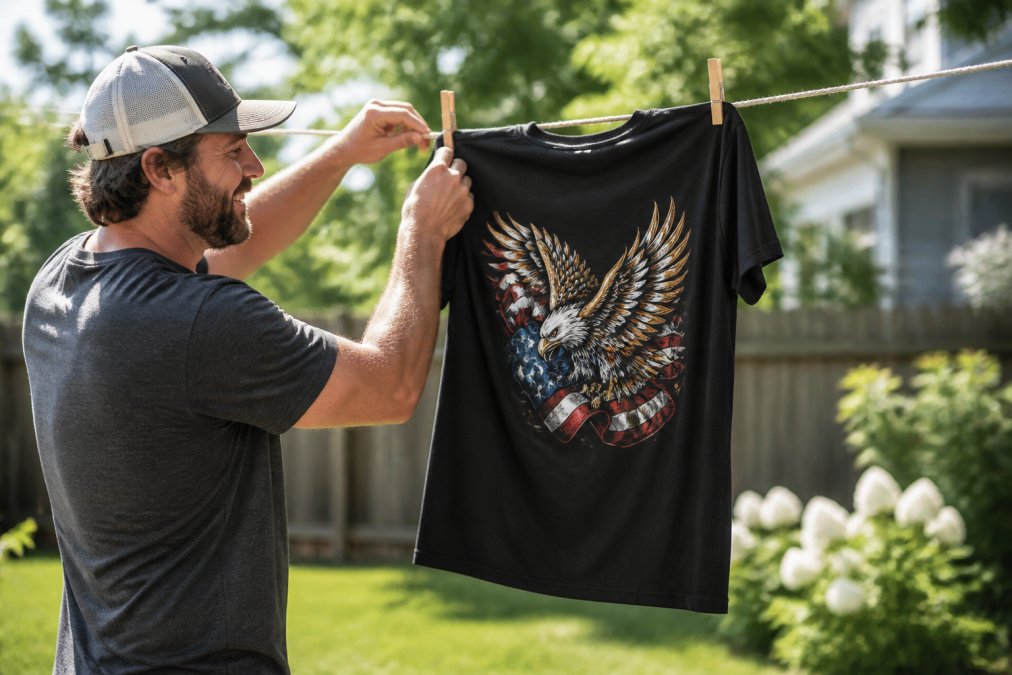
Air drying is the gold standard for screen printed apparel. Line drying or hanging the shirt to dry eliminates heat exposure entirely. The print remains flexible and stress-free during the drying process. Air drying takes longer than machine drying, but the extended print life justifies the wait.
If machine drying is necessary, use the lowest heat setting available. Some machines have an "air dry" or "delicate" setting that uses minimal or no heat. These settings are acceptable for screen printed graphics. Never use high heat or regular cycles, which generate temperatures that make ink brittle.
Tumble dry on low heat still creates friction and some thermal stress. If you must use machine drying, remove the shirt while slightly damp and finish air drying to reduce total heat exposure. The combination approach minimizes damage compared to full machine drying.
Avoid direct sunlight during air drying, which can fade graphic prints over time. Shade drying preserves both the ink bond and the color vibrancy of the design.
Conclusion
Quality matters from the start. Apparel from brands like Awake Republic, crafted with original graphic designs and high-quality construction, begins with properly cured ink and quality fabric. Paired with best care practices, these garments maintain their bold visual impact and structural integrity for years. Get started with Awake Republic's collection of original patriotic and pet-themed designs today!
Frequently Asked Questions
What causes graphic t-shirts to crack?
Graphic prints crack due to thermal stress from heat exposure, mechanical stress from friction during washing and drying, and poor ink bonding. Screen printed garments are especially vulnerable when exposed to high temperatures, aggressive washing cycles, or harsh chemicals. The plastisol ink used in screen printing can lose flexibility over time, making it brittle and prone to cracking. Water hardness, detergent residue, and fabric softeners also weaken the ink bond, accelerating deterioration.
How do you prevent screen prints from cracking?
Prevent cracking by washing in cold water on a gentle cycle, turning garments inside out, using a mesh laundry bag, and avoiding fabric softeners and bleach. Air dry your screen printed shirts instead of using a tumble dryer, as heat is one of the primary causes of ink failure. Select mild detergent and keep wash loads smaller to reduce agitation. Proper storage away from direct sunlight and heat also extends the lifecycle of the print and maintains ink integrity.
Can you fix a cracked graphic on a shirt?
Once a screen print cracks, complete repair is difficult. Small cracks may be temporarily stabilized by applying a flexible fabric paint or iron-on patch from the inside, but this won't restore the original appearance. For valuable pieces, professional re-printing is an option, though it's often not cost-effective. Prevention is far more practical than repair, which is why following proper washing and drying techniques protects your investment in quality graphic apparel.
Does heat cause graphic prints to crack?
Yes, heat is a major cause of graphic print cracking. High curing temperatures during manufacturing, hot water washing, and machine drying all accelerate thermal stress on the ink. Even ironing over a print can cause damage if the temperature is too high or direct contact is made. Cold water washing and line drying are the safest methods to prevent heat-related cracking and preserve the ink bond throughout the garment's lifespan.
This article was written using GrandRanker