
7 Steps to Find Your Size in Independent Clothing Labels
Last Updated: October 30, 2026
Quick Summary
To find your size in independent labels, measure your chest, waist, hips and inseam with a soft tape, then compare those numbers to the brand's body-measurement chart instead of trusting the size letter on the tag. Independent labels cut to their own fit block, so a medium can run a full size off from a big-box retailer.
- Measure over a thin shirt with the tape level and snug, and write your numbers in inches to one decimal place.
- Body measurements describe you, while garment measurements describe the flat-laid shirt, so do not expect them to match.
- Between sizes, size up in untreated 100% cotton and take the smaller size in a cotton-poly blend with stretch.
- Convert centimeters to inches by dividing by 2.54 before comparing them to your body measurements.
- If a chart lists a size range, pick the size where your measurement sits in the middle, not at the edge.
Table of Contents
- Why Independent Label Sizing Is Different
- How to Measure Yourself for Clothes Before You Order
- How to Read a Clothing Size Chart Like a Fit Check
- How to Measure a T-Shirt You Already Own
- What to Do Between Clothing Sizes
- Fit Differences by Garment Type, Fabric, and Cut
- International Sizing and Inconsistent Size Labels
- Ordering Your First Awake Republic Piece With Confidence
- Frequently Asked Questions
Why Independent Label Sizing Is Different
Independent labels sell fewer units per design, so they often cut garments in smaller batches with their own fit block. Reading the About Awake Republic page helps you understand the brand behind the label and trust its sizing approach. That means a size medium from one brand can run a full size off from a medium at a big-box retailer.
The tag is a starting point. The numbers are the truth.
Here is what most shoppers get wrong: they order the size they wear at a chain store and assume it carries over. It rarely does.
- Big retailers grade sizes to a single national fit standard
- Independent labels often use a narrower or boxier cut
- Print-on-demand production can shift shrinkage slightly between runs
- Fabric weight and blend change how a garment drapes
A common mistake is skipping the chart because it feels like extra work. The chart is the shortcut. It saves a return and two weeks of waiting.
How to Measure Yourself for Clothes Before You Order
To measure yourself for clothes, use a soft tape measure against a fitted t-shirt, keep the tape level and snug but not tight, and write down four numbers. Those numbers are your real size, and they work across every independent label that publishes a chart.
You need a mirror, a soft tape, and five minutes. Stand tall and relaxed. Do not suck in or hold your breath.
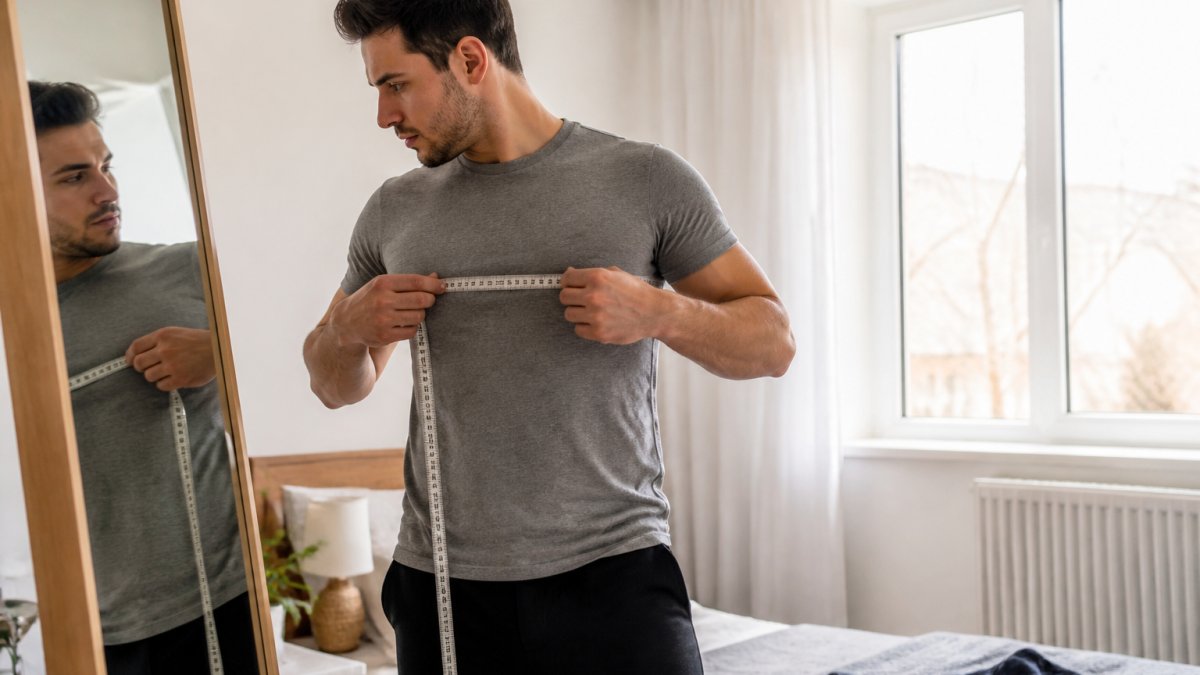
Measure over a thin shirt, not bare skin and not a bulky hoodie. Have someone help if you can. A second set of hands keeps the tape level.
The Four Measurements That Matter Most
- Chest or bust: wrap the tape around the fullest part, under the arms, and keep it level across the back.
- Waist: find the natural bend point of your torso and measure there, not at the hip bone.
- Hips: measure around the fullest point of the seat, feet together.
- Inseam: measure from the crotch seam to the hem on a pair of pants that already fit.
Write the numbers in inches to one decimal place. Compare those numbers to the chart, not to your memory of past purchases. For a deeper walkthrough on dialing in fit, see 7 Steps to Choose the Right Streetwear Fit.
Four numbers, taken once with a soft tape, are all you need to compare against any independent label's chart.
Measurement |
Where to measure |
Note |
|---|---|---|
Chest or bust |
Around the fullest part, under the arms |
Keep tape level across the back |
Waist |
At the natural bend point of your torso |
Not at the hip bone |
Hips |
Around the fullest point of the seat |
Feet together |
Inseam |
Crotch seam to hem on pants that fit |
Use a pair you already own |
How to Read a Clothing Size Chart Like a Fit Check
Reading a clothing size chart means matching your body measurements to the chart's body-measurement column, not guessing from the size letter. Most charts list two different sets of numbers, and mixing them up is the single biggest cause of wrong orders.
Body measurements describe the person. Garment measurements describe the flat-laid shirt. They are not the same, and they should not match.
Garment Measurements vs. Body Measurements
A size medium tee with a 20-inch chest width is 40 inches around when laid flat and doubled. That is a garment measurement. If your body chest is 40 inches, that tee fits close. If you want room, size up.
- Body measurements = your numbers from the tape
- Garment measurements = the shirt's numbers, flat and doubled
- Ease = the gap between the two, which is the room you feel
Check the chart's units before you compare. Some labels list centimeters. Convert before you decide.
How to Measure a T-Shirt You Already Own
Measuring a t-shirt you already own is the fastest shortcut to a confident order. Lay the shirt flat, smooth the wrinkles, and measure three points with the tape.
- Chest width: armpit seam to armpit seam, straight across
- Body length: highest point of the shoulder to the bottom hem
- Sleeve length: shoulder seam to the sleeve opening
Double the chest width to get the full circumference. Now compare that number to the brand's garment chart. If the chart lists a 20-inch width and your favorite tee measures 21 inches, you know you want the larger size.
This method works because it removes guesswork. You are matching a shirt you already trust to a chart you have never used.
What to Do Between Clothing Sizes
Between sizes, choose based on fabric, cut, and how you intend to wear the garment, not the tag. The letter is a label; the chart numbers and the fabric notes are the decision inputs.
Start with the fabric. A 100% cotton tee with no stretch will feel tighter after washing, so size up if you are on the fence.
Then check the cut. Slim fit is narrow through the waist and less forgiving between sizes, so take the larger size unless you want a close fit. Regular fit is straighter through the body and easier to size.
Ask yourself three questions before you commit:
Awake Republic® Beagle Faithful Companions T-Shirt (100% Cotton) →
- Does the fabric stretch? Cotton alone stretches little; a cotton-poly blend with elastane recovers its shape.
- Do you want a close fit or room to layer? Layering pushes you up a size in hoodies and zip styles.
- Does the label pre-shrink the fabric? Pre-shrunk cotton limits shrinkage; untreated cotton can shrink noticeably on the first wash.
A practical pattern many shoppers use: compare your chest width to the garment's flat chest width first, then check body length.
Awake Republic's tees are pre-shrunk 100% combed and ring-spun cotton, and the hoodies use a cotton-poly blend with a regular fit. Read the fabric notes before you decide.
Fit Differences by Garment Type, Fabric, and Cut
Fit changes with garment type, fabric weight, and cut, so one size number does not travel across a whole wardrobe. A tee and a hoodie in the same size will feel different, and that is normal.
- Tees: lighter fabric, closer to the body, less room to layer
- Hoodies: heavier fabric, more ease through the chest and shoulders
- Zip styles: cut with a straighter body, so check chest and sleeve length
- Slim fit: narrow through the waist, less forgiving between sizes
- Regular fit: straighter through the body, easier to size
- Oversized fit: intentional extra room, so do not size up
Fabric weight matters too. A heavier fleece holds structure and hides the body less. A lighter cotton jersey drapes closer. If you are comparing a tee to a hoodie, use the hoodie's own chart. For a concrete example, the Awake Republic We Don't Deserve Dogs Unisex Hoodie shows how a hoodie's fit differs from a tee's.
International Sizing and Inconsistent Size Labels
International sizing is inconsistent because there is no single enforced standard across brands.
The fix is simple: ignore the letter and convert to inches. Check whether the chart uses inches or centimeters, convert centimeters to inches by dividing by 2.54, and compare the converted number to your body measurements.
A measurement-first approach beats any conversion table. Write down your chest, waist, hip, and inseam in inches once, then compare those numbers directly to each brand's garment measurements.
When a chart lists a size range instead of a single number, that range reflects grading tolerance. Read the range and pick the size where your measurement sits in the middle, not at the edge.
For online shopping, a few habits close the gap:
- Read the product measurements, not just the size letter, and compare them to a garment you already own.
- Check customer fit notes and model information, height, weight, and the size worn tell you how the garment sits on a real body.
- Ask the seller directly if the chart is missing a measurement you need; independent labels often answer quickly.
- Confirm the return policy and return window before you order, especially for final-sale or made-to-order pieces.
If a label publishes no measurements at all, that is a signal. Either ask for them or treat the purchase as higher risk.
Ordering Your First Awake Republic Piece With Confidence
Ordering a first piece from an independent label comes down to three moves: measure, match, and check the fabric. Do those and the size letter stops mattering.
Awake Republic publishes size charts on its product pages, so you can compare your numbers before you buy. Browse the Dog Breed T-Shirts collection to pick a first piece and apply the sizing guidance. The Unisex 100% Cotton Are You Awake Yet T-Shirt lists length, width, and chest for sizes S through 3XL.

A few habits that save returns:
- Measure once, write it down, keep the note
- Compare chest width first, then length
- Read the fabric weight before you decide between sizes
- Check the return window before you order
Best for: shoppers who want an original graphic piece and a chart they can actually use. Skip if: you want a one-size-fits-all answer with no measuring.
Finding the right size in independent labels is not about luck. It is about four numbers, a tape measure, and the willingness to read a chart instead of a tag.
Awake Republic makes that easier with a published size chart on the product pages, original graphic designs, and pre-shrunk cotton tees. The label's bold American symbolism and contemporary streetwear structure are made for people who value self-expression.
Get started with Awake Republic and order a piece that fits the first time.
Frequently Asked Questions
How do I find my size when clothing brands use different size charts?
Ignore the letter on the tag and work from numbers. Measure your chest, waist, and hips, then compare those figures to each brand's own chart. Independent labels often publish garment measurements rather than body measurements, so check which one you are reading. A medium in one brand can match a large in another. Keep a note on your phone with your measurements in inches and recheck them against every new label before you order.
Should I size up or down in independent streetwear?
It depends on the cut and the fabric. A 100% cotton tee like the Awake Republic Beagle Faithful Companions T-Shirt is pre-shrunk, so it holds its size after washing, and the unisex fit runs roomy through the chest. If you want a closer fit, take your measured size. If you want the loose streetwear look, size up one. For zip hoodies with a regular fit, stay with your measured size unless you plan to layer heavily underneath.
What should I do if an independent brand does not have a size chart?
Measure a t-shirt you already own and love, then ask the brand for the flat measurements of the size you are considering. Most small labels will send chest width and body length within a day. If they cannot, treat that as a signal about how they handle customer questions. You can also check the return policy before ordering so a wrong guess does not cost you money.
How do I choose the right size for an oversized fit?
Start with your measured size, then go up one for a relaxed drape and two for a deliberately oversized look. Check the garment's chest width and length in the size chart first, because an oversized cut in one label may match a regular cut in another. Fabric matters too: a 4.2 oz./yd.² cotton tee drapes loosely, while an 8 oz./yd.² cotton-poly blend hoodie holds a boxier shape.
