
7 Steps to Choose the Right Streetwear Fit
Quick Summary
A streetwear fit is how a garment sits on your body, balancing volume, length, and shape so no single piece overwhelms the outfit. Choose it by finding your personal style, measuring yourself and comparing those numbers to the brand's size chart, then pairing loose pieces with fitted ones.
- Compare garment measurements to the brand's size chart, not just the letter size.
- Take chest, shoulder, sleeve, waist, and inseam measurements in inches before shopping.
- Pair a very loose top with a slimmer or straight-leg bottom for balance.
- Check that sleeves don't cover your hands when you raise your arms overhead.
- Keep a note of your best-fitting garment measurements to compare against new brands.
Table of Contents
- What Streetwear Fit Actually Means
- Step 1: Find Your Personal Style Before You Shop
- Step 2: Take the Right Measurements and Use a Sizing Guide
- Step 3: Pick Tops and Bottoms That Work Together
- Step 4: Learn How to Style Oversized Clothes Without Looking Lost
- Step 5: Layer for Depth and Proportion
- Your Repeatable Fit-Check Before You Buy or Wear
- Frequently Asked Questions
What Streetwear Fit Actually Means
Streetwear fit is how a garment sits on the body. The right fit balances volume, length, and shape so no single piece overwhelms the outfit.
Fit covers more than size: the shoulder line, sleeve length, hem, and room through the chest and torso all matter. A tee can be oversized and still look sharp if the shoulders land where they should.
Streetwear leans toward relaxed or oversized silhouettes. The goal is intentional looseness, not clothes that simply feel too big.
Watch out: Buying a hoodie based only on your usual size can leave you with sleeves that cover your hands. Check the sleeve length in the size chart before you order.
Step 1: Find Your Personal Style Before You Shop
Decide how you want to look, not what's trending. Streetwear ranges from clean and minimal to loud and graphic, and knowing your direction keeps you from buying pieces that don't fit your daily life.
Ask yourself a few simple questions:
- Do you dress more for comfort or for making a statement?
- Do you usually wear dark colors or bright ones?
- Will these clothes be for work, weekends, or both?
Your answers point you toward a fit style. A minimalist usually wants clean, slightly relaxed lines. A graphic-focused dresser may prefer a more boxy, statement silhouette.
Write down three outfits you already like on yourself or on others. Look for patterns in the fit. Those patterns show you the proportions you already respond to.
Step 2: Take the Right Measurements and Use a Sizing Guide
Measurements beat guessing and close the gap between how a garment looks on a model and how it sits on you. Knowing which numbers to take and how to compare them to a piece you already own can help with sizing.
Start with body measurements for your baseline, then garment measurements to see how a specific piece is cut.
Body measurements to take (in inches):
- Chest: Wrap a flexible tape measure around the fullest part of your chest, keeping it level under your arms and across your shoulder blades. Keep the tape snug but not tight, and breathe normally.
- Shoulder: Measure from the edge of one shoulder bone to the edge of the other, across the back.
- Sleeve: Start at the shoulder seam point and measure down the outside of your arm to where you want the cuff to end. For a tee, that is usually just past the wrist bone; for a hoodie, add an inch or two for a relaxed look.
- Waist: Measure around your natural waist, usually just above the belly button, keeping the tape level. Do not pull it tight.
- Inseam: Measure from the crotch seam down the inside of your leg to the hem point you want. If you have a pair of pants that fit well, lay them flat and measure from the crotch seam to the hem for a quick reference.
Write these numbers down once and keep them on your phone.
Garment measurements to compare:
- Lay a favorite tee or hoodie flat on a table, smoothing out wrinkles.
- Measure from the shoulder seam to the hem for length.
- Measure across the chest, armpit to armpit, and double it for the full chest width.
- Measure from the shoulder seam to the end of the sleeve for sleeve length.
- Compare those numbers to the brand's size chart, not to the letter size alone.
Pay attention to units: Awake Republic lists measurements in inches, so use a tape marked in inches. Don't rely on a letter size alone, because a medium from one label can measure like a small from another.
The Awake Republic Logo Streetwear T-Shirt is listed at $19.99 and provides length, width, and chest measurements for each size from XS to 3XL. The chart is a useful starting point for comparing against your own well-fitting clothes.
For a hoodie, check the Awake Republic Datsun 240Z Streetwear Zip Hoodie, listed at $50.50. Its size chart includes length, chest, and sleeve length.
Watch out: Heavy fabric shrinks and stretches differently than light cotton, so follow the care label closely. Even pre-shrunk garments move slightly after the first wash. Between sizes, size up for heavy cotton and size down only if the chart shows a clearly relaxed cut.
A quick brand-to-brand tip: Keep a note on your phone with the chest width, length, and sleeve length of your best-fitting tee, hoodie, and pants. Compare those numbers to a new brand's size chart before you order; this one habit removes most of the guesswork from online shopping.
The article lists the body measurements to take and the garment measurements to compare, so here they are side by side with how to take them.
Measurement |
How to take it |
Note |
|---|---|---|
Chest |
Fullest part, level under arms |
Keep tape snug, not tight |
Shoulder |
Edge of one shoulder bone to the other |
Measure across the back |
Sleeve |
From shoulder seam point down to cuff |
Add 1-2 inches for a hoodie |
Waist |
Natural waist, just above belly button |
Keep tape level, not pulled tight |
Inseam |
Crotch seam down inside leg to hem |
Can measure from well-fitting pants |
Step 3: Pick Tops and Bottoms That Work Together
The top and bottom should balance each other. A very loose top pairs best with a slimmer or straight-leg bottom; wide tops with wide pants look shapeless unless one piece has structure.
Awake Republic® Logo Streetwear T-Shirt (100% Cotton) →
Common pairings that work well:
- Oversized graphic tee with straight-leg jeans: Keeps the top relaxed while the bottom stays clean.
- Zip hoodie with cargo pants: Adds volume on both pieces, so keep one of them slightly more fitted.
- Button-up shirt with joggers: Dress up a casual bottom with a structured top.
When both pieces are loose, add one fitted or structured element, such as a belt, a cap, or sneakers with clean lines.
Mind the length of your bottoms. Cropped pants show more shoe and look intentional, while full-length pants with a long top can make you look shorter, so adjust the hem if needed.
Step 4: Learn How to Style Oversized Clothes Without Looking Lost
Oversized clothing looks best when you control where the volume sits. A large tee needs a clear shape underneath and a loose hoodie needs a defined bottom half, or the outfit looks like you grabbed the wrong sizes by accident.
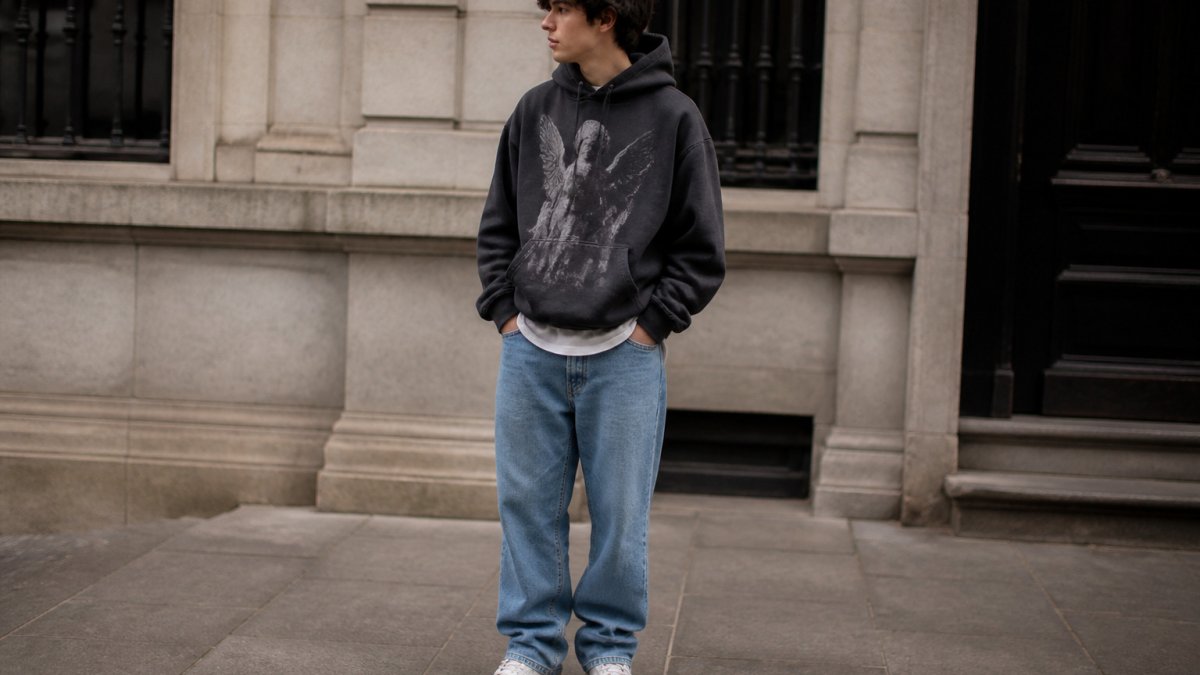
Try these approaches:
- Tuck the front of a tee into a belt or waistband to show your shape.
- Pair a wide top with a slim or straight bottom.
- Keep the color palette tight, with two or three main colors.
- Choose sneakers that look clean and fit the overall style.
The Awake Republic Respect The Locals Unisex Zip Hoodie, listed at $50.50, is built for relaxed outerwear. Its regular fit works well with straight-leg bottoms when you want an oversized look that still feels deliberate.
Add one relaxed item at a time and balance it with a fitted or structured piece.
Step 5: Layer for Depth and Proportion
Layering adds visual depth and lets you control proportion. A tee under a zip hoodie gives you two textures and two lengths; keep the layers from competing by varying their length and fit.
A simple layering approach:
- Choose a base layer that is closer to the body.
- Add an outer layer that is slightly longer or looser.
- Leave the bottom layer's hem visible below the outer layer.
For cold weather, add a zip hoodie over a long-sleeve tee. The zip adjusts warmth, the hood adds shape at the neck, and keeping it open or partway zipped shows the layers underneath.
If your outer layer is oversized, keep the base layer closer to the body so the outfit does not bulk up too much.
Your Repeatable Fit-Check Before You Buy or Wear
Use the same checklist every time you shop or get dressed.
Before buying, check these points:
- Shoulder seam: Does it land near the edge of your shoulder, or does it drop down your arm?
- Length: Does the hem sit where you want it, or does it cover too much of your hips?
- Sleeve length: Can you move your arms without the sleeves riding up or covering your hands? Raise your arms overhead and then lower them. If the cuff swallows your hand, the sleeve is too long for a clean look unless you plan to push it up.
- Chest width: Can you lift your arms without the fabric pulling tight? Pinch the fabric at the chest.
- Rise (for pants): Does the waistband sit where you want it, and does the rise feel comfortable when you sit down?
- Stacking (for pants): Does the hem break cleanly over your shoe, or does it pool around your ankle?
- Mobility: Squat, reach, and twist.
- Layering: If you plan to wear a tee under a hoodie, try both on together. The base layer should be closer to the body and the outer layer slightly longer or looser, so the outfit does not bulk up too much.
Before wearing, check these points:
- Is the outfit balanced between loose and fitted pieces? If both the top and bottom are very loose, add one structured element such as a belt, a cap, or clean sneakers.
- Does one element stand out as the focal point? A graphic tee, a statement hoodie, or a bold sneaker should be the star. If everything is loud, nothing is.
- Do your colors work together without clashing? Two or three main colors is a reliable rule. A tight palette makes oversized fits look intentional rather than accidental.
- Does the hem of your top sit where you want it relative to your bottoms?
A quick proportion check for different frames:
- If you are shorter: Keep your top hem near your hip bone and choose a mid or high rise.
- If you are taller: You can carry more volume. A longer tee with a straight-leg bottom works well. Just keep one piece controlled so the outfit does not look like it is swallowing you.
- If you are broader through the chest or shoulders: A drop-shoulder tee can work, but check that the sleeve does not pull across the chest. A slightly relaxed fit with a straight hem is usually cleaner than a boxy cut.
- If you are narrower through the frame: A boxy tee or a layered hoodie can add visual width. Pair it with a straight or slightly tapered bottom to keep the silhouette balanced.
None of these rules are about hiding or correcting your body; they're about creating proportion so the clothes look deliberate. The best fit lets you move, feel comfortable, and look like you chose the outfit on purpose.
Repeat this check with each new piece.
Frequently Asked Questions
How should streetwear clothes fit?
Streetwear fit should look intentional, not accidental. Check that the garment's measurements match your own before you commit.
How do I choose the right size for an oversized streetwear look?
Compare the garment's chest and length measurements to a piece you already like. Look for the brand's size guide with measurements in inches, and avoid guessing from the label alone.
How can I balance oversized and fitted pieces in an outfit?
Pair one oversized piece with one fitted or structured piece. An oversized hoodie with slim or straight-leg jeans is the classic example, because the contrast keeps the outfit from looking shapeless. You can also reverse it with a fitted tee under a loose jacket or wide cargos. Keep the fitted item in the area you want to emphasize, and let the oversized item carry the volume.
How do I layer streetwear without looking bulky?
Limit yourself to three layers and make sure each one is cut slightly shorter or narrower than the one beneath it. A graphic tee under a zip hoodie under a light jacket reads as deliberate when the lengths step down. Choose lightweight fabrics for the middle layers, and avoid stacking several heavy pieces at the chest. Roll sleeves or open the front of the outer layer to show the layer underneath and break up the bulk.
