
Why Wear Clothing With a Message?
Table of Contents
- Why Wear Clothing With a Message?
- How Clothing Reflects Identity and Personal Values
- The Emotional Impact of Meaningful Graphic T-Shirts
- Conversation-Starting T-Shirts: How a Slogan Opens Dialogue
- How to Choose a Graphic Tee That Feels Authentic
- Evidence and Limits: What Research Says About Message Clothing
- Risks, Misinterpretation, and Ethical Considerations
- Conclusion
- Frequently Asked Questions
Last Updated: October 17, 2026
Why Wear Clothing With a Message?
Clothing with a message turns an ordinary outfit into a statement you carry all day. This guide from Awake Republic LLC explains why people wear message-bearing apparel, what it actually does for the wearer, and how to choose pieces that feel authentic rather than performative.
The appeal is simple: a graphic T-shirt communicates before you say a word. It signals values, invites conversation, and lets the wearer express identity without a speech. Below, we'll break down the psychology, the practical selection criteria, and the honest limits of what a slogan can do.
But first, here's what most guides get wrong: they treat message clothing as pure decoration. It isn't. It's visual communication with a real audience, and that changes how you should choose it.
How Clothing Reflects Identity and Personal Values
Clothing reflects identity because people use dress to signal group membership, beliefs, and personality before any conversation starts. A graphic T-shirt compresses that signal into a single readable line.
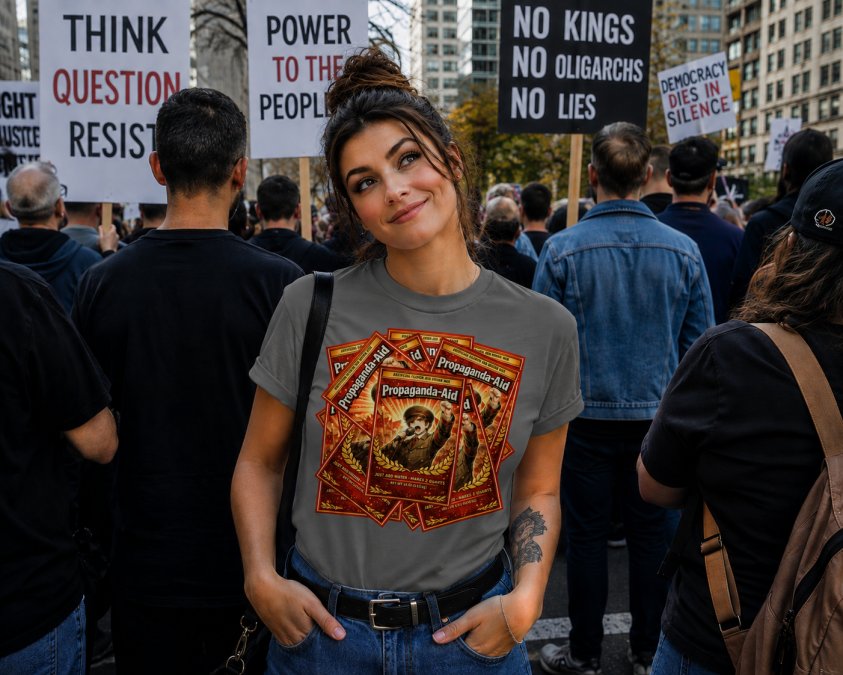
A close-up of a person wearing a bold graphic T-shirt from Awake Republic®
Personal style functions as a form of self-expression that operates on two levels. The wearer gets a private reminder of what they value. Observers get a public cue about who they're dealing with. Research on dress and cognition suggests clothing can influence the wearer's own self-perception, though effects are modest and context-dependent rather than transformative.
What most guides miss is the audience problem. A message read by a stranger at a distance is a first impression; a message read by a coworker is a relationship signal. The same shirt does different work in different rooms, which is why authenticity matters more than shock value.
The Emotional Impact of Meaningful Graphic T-Shirts
Meaningful graphic T-shirts affect mood by pairing a visual reminder with a physical garment the wearer chose deliberately. That combination tends to produce a small confidence boost, particularly when the message matches a belief the wearer already holds.
The emotional mechanism is straightforward. Inspirational apparel works as a wearable cue: seeing the same word or symbol repeatedly can reinforce intention and encouragement throughout the day. Many people describe this as motivation by reminder rather than motivation by novelty.
There's a catch worth naming. The effect depends on belief. A slogan the wearer doesn't genuinely endorse reads as costume, and costume produces self-consciousness instead of confidence. The emotional payoff comes from congruence between the message and the person wearing it.
Conversation-Starting T-Shirts: How a Slogan Opens Dialogue
Conversation-starting T-shirts work because a visible slogan gives strangers a legitimate reason to speak. It converts an awkward cold approach into a comment about something both parties can see. For independent thinkers who dislike small talk, that filtering effect is often the main benefit.
But the mechanics matter more than most guides admit. A slogan starts a dialogue only when it is readable at conversational distance, specific enough to react to, and open-ended enough to invite a response rather than close one off.
Audience and setting do most of the work. The same shirt behaves differently in different rooms:
- At a weekend event or a casual gathering, a bold slogan can act as an icebreaker because strangers expect to talk.
- At a workplace with a dress code, a political or confrontational message may create friction even if the wearer intends it as humor.
- At school pickup or a family gathering, a message that reads as partisan can shift the mood before anyone says hello.
- In a client meeting, a subtle reference or a small chest print is more likely to prompt a question than a large back print.
Readability is part of the mechanism. High-contrast lettering, larger type, and placement at eye level or chest height make a message legible across a room. Low-contrast or small type forces people to lean in, which defeats the purpose of a conversation opener.
There is also a boundary function worth naming. A message that signals a clear point of view can filter out people who don't share it, which is often the point. But that filter cuts both ways: a slogan that reads as an attack will get reactions, but not the kind you want.
The practical takeaway is that conversation-starting clothing is a communication tool with a real audience. Choose messages that are readable, specific, and open-ended, and match the boldness of the design to the rooms you actually enter.
How to Choose a Graphic Tee That Feels Authentic
Choosing a graphic tee that feels authentic comes down to three tests: does the message match your actual views, does the design survive close inspection, and can you wear it in the settings you actually frequent.
Start with the message. Write down what you want the shirt to say about you, then check whether the design says that or something adjacent. Authenticity is the difference between wearing a belief and wearing a costume.
Then check construction. A message is only as good as the garment carrying it. Look for specifics:
Unite Our Republic 100% Cotton T-Shirt | Awake Republic® →
- Fabric content and weight stated clearly (100% combed ring-spun cotton holds print detail well)
- Pre-shrunk fabric so the fit you buy is the fit you keep
- Side-seamed construction for a shape that doesn't twist after washing
- Shoulder-to-shoulder taping for durability at the stress points
- Print method described, not just pictured
Fit and setting come next. A bold design works at a weekend event and may not work in a conservative office. Decide which audiences will see the shirt most often, then choose message visibility accordingly. A subtle reference suits everyday wear; a large statement suits occasions where you want the attention.
Decision |
Ask This |
Choose This |
|---|---|---|
Message |
Does this match a belief I hold? |
A slogan you'd defend in conversation |
Audience |
Who will read it most? |
Subtle for work, bold for weekends |
Construction |
Is fabric weight and sewing stated? |
Pre-shrunk, side-seamed, 100% cotton |
Longevity |
Will I still wear it next year? |
Timeless symbols over trend phrases |
Setting |
Where will I actually wear it? |
Everyday wear first, statement pieces second |
Awake Republic builds its line around this idea. The Unite Our Republic T-Shirt uses 100% combed and ring-spun cotton at 4.2 oz./yd.², pre-shrunk and side-seamed, with shoulder-to-shoulder taping. It's a $19.99 piece designed to be worn regularly rather than saved for an occasion.

Unite Our Republic 100% Cotton T-Shirt | Awake Republic®
Evidence and Limits: What Research Says About Message Clothing
The honest answer is that evidence for clothing's psychological effects is real but modest. Research on enclothed cognition indicates that what people wear can shift their own self-perception and behavior, but the effects are situational and often small. That matters for anyone weighing inspirational apparel as a tool.
What the research does show is a mechanism, not a guarantee. The core idea is that clothing carries symbolic meaning, and when a wearer adopts a garment whose meaning matches a desired trait, the wearer may temporarily act more in line with that trait.
What the research does not show is equally important. It does not show that a message shirt changes long-term behavior, replaces skill or preparation, or works the same way for every wearer. The research literature on enclothed cognition is worth reading before treating a slogan as a behavior change strategy.
A practical way to think about limits is to separate three claims:
- Mood and self-perception: modest, short-term effects are plausible when the message matches the wearer's beliefs.
- Behavior change: weak on its own; a shirt can prompt a reminder but not supply the habit.
- Social effect: real but unpredictable, because it depends on how observers interpret the message.
The practical takeaway is modest expectations. A message shirt can nudge mood, prompt a conversation, and reinforce identity. It won't rewire anything. Treat it as a cue that works best alongside habits, skills, and preparation you already have in place.
Risks, Misinterpretation, and Ethical Considerations
Misinterpretation is the most common risk with message clothing, and it cuts in two directions. A viewer can read hostility where you intended humor, or read a political position where you intended a general principle.
Audience and setting do most of the work here. The same design that lands well at a rally can create friction at a family gathering or a workplace with a dress code.
Accessibility deserves a mention that competitors skip. Message visibility depends on contrast, type size, and placement. High-contrast lettering and larger type read better across distances and for viewers with low vision. Inclusive design isn't a nicety; it determines whether the message reaches the audience at all.
Conclusion
Wearing clothing with a message is a small act with real reach: it shapes how you see yourself, how others read you, and how conversations begin. The challenge is choosing messages that hold up across audiences, settings, and the long run rather than a single outing.
Awake Republic designs for exactly that balance. The End The Endless Wars T-Shirt and the End The Fed Madness T-Shirt both use 100% combed ring-spun cotton with pre-shrunk, side-seamed construction at $19.99, built for regular wear rather than a single statement moment. Original graphic designs, bold American symbolism, and contemporary streetwear structure give independent thinkers pieces that provoke thought without falling apart after a few washes.


Start with one message you'd genuinely defend, wear it where it fits, and see who starts the conversation.
Frequently Asked Questions
Why do people wear clothing with messages?
People wear message clothing to express identity, values, and beliefs without saying a word. A graphic T-shirt or slogan acts as visual communication, letting the wearer share a political stance, a sense of humor, or a cultural affiliation. It also serves as a conversation starter, inviting social interaction with like-minded strangers. For many, it's a low-pressure way to make a statement and feel more confident in everyday settings.
Can inspirational clothing affect your mood?
Yes, what you wear can influence how you feel. Wearing a shirt with an inspirational or positive message can reinforce your own mindset and serve as a reminder of your goals or values. While the effect is not a substitute for deeper psychological work, many people report feeling more motivated and self-aware when their clothing aligns with their intentions. The impact is often subtle but real for the wearer.
How do you choose a graphic shirt that reflects your values?
Start by identifying the message you want to communicate and the setting you'll wear it in. Consider the audience: a bold political slogan may suit a rally but feel out of place at work. Check the quality of the print and fabric, since meaningful graphic T-shirts should hold up over time. Finally, choose a design that feels authentic to you, not just trendy, so you'll actually wear it and feel comfortable discussing its message.
How can a T-shirt start a conversation?
A T-shirt with a clear message gives others an easy opening to comment or ask about it. Conversation-starting T-shirts work because they display a visible opinion or interest, which signals shared values to people nearby. To encourage dialogue, pick a message you're comfortable explaining and keep your response open and friendly. The shirt does the initial work; your willingness to engage turns it into a real exchange.