
Is Patriotic Clothing Considered Aggressive?
Table of Contents
- What Makes Patriotic Clothing Feel Aggressive to Some People
- US Flag Code for Clothing: What Federal Law Actually Says
- Is Wearing the American Flag Disrespectful? The Honest Answer
- The Psychological Impact of 'Aggressive' Patriotic Signaling
- Patriotic Fashion Trends: How the Aesthetic Has Evolved
Last Updated: August 13, 2026
What Makes Patriotic Clothing Feel Aggressive to Some People
Patriotic clothing is apparel that displays national symbols, mottos, flag imagery, or political messaging to express pride in one's country. The question of whether patriotic clothing is considered aggressive has no single answer, it depends on the graphic, the context, and the audience reading it. Awake Republic LLC has tracked this conversation closely, because the line between bold self-expression and perceived hostility is exactly where thoughtful design lives.
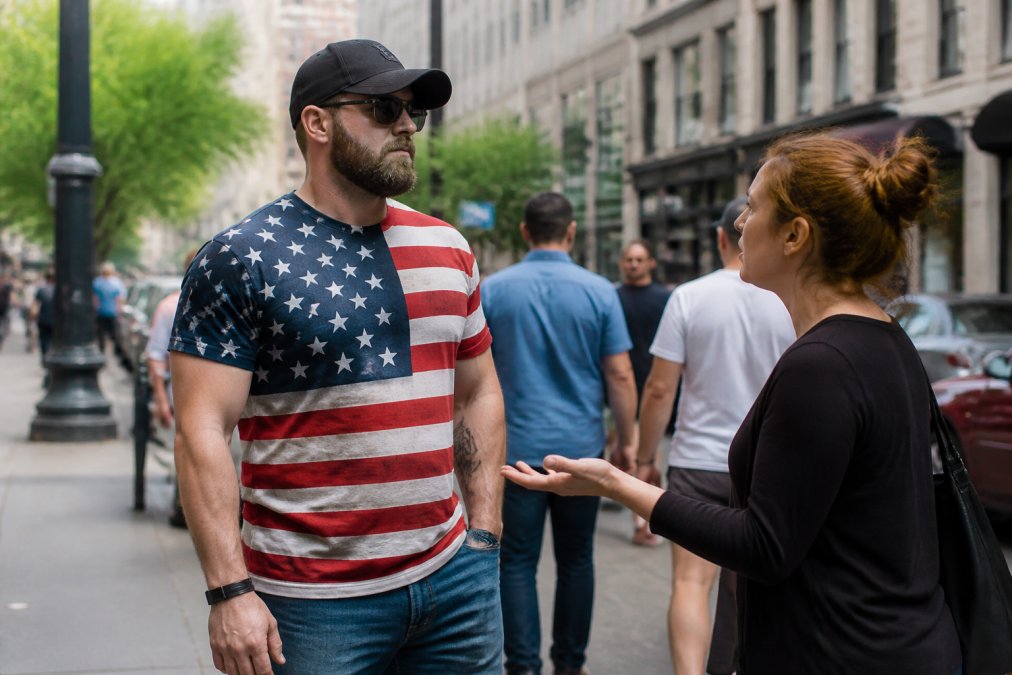
The perception of aggression rarely comes from the flag itself. It comes from what surrounds it: the slogan, the imagery, the tone of the design, and the social moment in which it is worn. A clean stars-and-stripes print reads differently than a skull overlaid on the flag with a confrontational tagline. Both are patriotic apparel. Neither is illegal. But public perception treats them as entirely different statements.
The Difference Between Bold Graphics and Hostile Messaging
Bold graphics communicate confidence. Hostile messaging communicates contempt. The distinction matters because they produce very different social reactions.
A design that says or features a particular political philosophy maybe considered assertive. A design that pairs national symbols with language targeting a specific group crosses into territory that most observers read as hostile, regardless of the wearer's intent. The graphic itself becomes the message, and visual communication works fast. People form a read on a shirt in under three seconds.
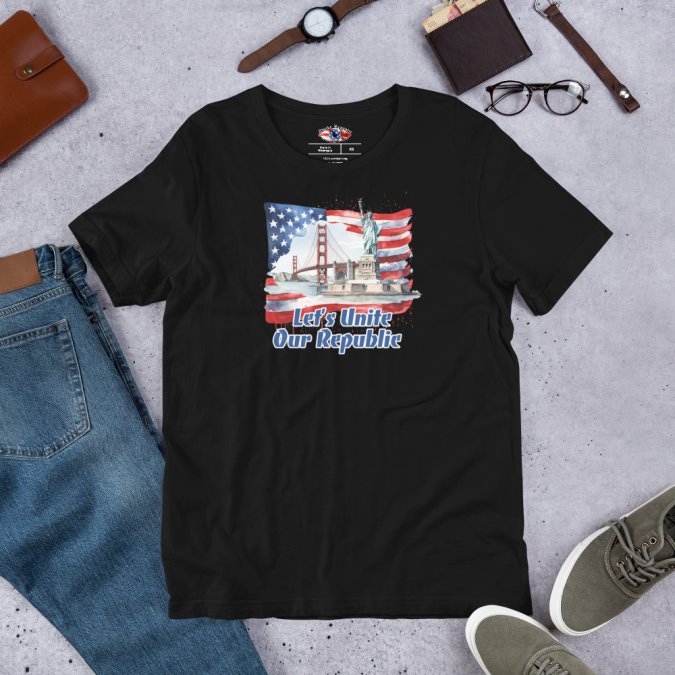
Unite Our Republic 100% Cotton T-Shirt | Awake Republic®
The most effective patriotic apparel makes a statement without requiring an argument to defend it. That is the difference between clothing that starts conversations and clothing that starts confrontations.
How Context Shapes Public Perception
Wear the same shirt to a Fourth of July cookout and to a corporate office, and you will get two entirely different reactions. Context is not a minor variable, it is the dominant one.
Social norms around patriotic apparel shift by setting. Outdoor events, sporting venues, and casual weekend environments tend to receive flag-inspired clothing as celebratory. More formal or politically mixed environments can read the same garment as a provocation, even when no provocation is intended. This is not a reason to avoid wearing what you believe. It is a reason to understand your audience the same way any communicator would.
US Flag Code for Clothing: What Federal Law Actually Says
The U.S. Flag Code, codified at Title 4 of the United States Code, establishes guidelines for the respectful display and use of the American flag. Many people assume it prohibits flag imagery on clothing entirely. It does not.
The Flag Code is a set of guidelines, not a criminal statute with enforceable penalties for civilians. It outlines standards for respectful display, including that the flag should not be used as wearing apparel, bedding, or drapery, but the Supreme Court's ruling in Texas v. Johnson (1989) established that flag-related expression is protected under the First Amendment. No federal law imposes fines or criminal penalties on private citizens for wearing flag imagery on a t-shirt.
What the Flag Code does is establish a framework for flag etiquette that reflects national values. Treating that framework as a hard legal prohibition overstates its authority.
Flag Imagery vs. an Actual Flag: A Critical Distinction
Flag imagery refers to designs that evoke or reproduce the appearance of the flag, stars, stripes, red-white-and-blue color schemes, or stylized flag graphics printed on fabric.
An actual flag is a physical flag used as a garment, cutting a flag and wearing it as a cape, for example.
The Flag Code's language about not wearing the flag as apparel refers to the latter. Printed flag imagery on a t-shirt, hoodie, or hat falls into a different category under both legal interpretation and common flag etiquette. Most patriotic apparel on the market today uses flag imagery, not actual flags repurposed as garments. That distinction is what makes flag-inspired clothing both legally sound and widely accepted.
Is Wearing the American Flag Disrespectful? The Honest Answer
Wearing the American flag as clothing is not inherently disrespectful, but the intent and execution of the garment matter. Printed flag imagery worn to honor national identity, commemorate service, or express political values is broadly understood as a form of patriotic expression. Using an actual flag as a costume piece, particularly in a mocking context, is where flag etiquette and public perception converge on genuine disrespect.
The honest answer is that most people wearing flag-inspired clothing are not trying to be disrespectful. They are expressing national pride, military support, or a political identity. The social judgment around it has more to do with the broader cultural moment than with the garment itself. During periods of political tension, even a straightforward flag shirt can be read through a partisan lens. That is a social norms problem, not a clothing problem.

According to the Congressional Research Service's analysis of the U.S. Flag Code, the code has never carried criminal enforcement for civilians, which reinforces that the question of disrespect is fundamentally one of social perception rather than legal violation.
The Psychological Impact of 'Aggressive' Patriotic Signaling
Psychological research on symbolic communication suggests that national symbols activate strong in-group and out-group responses. When someone perceives a garment as aggressive patriotic signaling, they are often responding to a combination of the symbol itself, the context, and their existing associations with that symbol.
The aggression is frequently projected rather than inherent. The same image can read as pride, defiance, or threat depending entirely on the viewer's prior experience with it.
This matters for anyone choosing patriotic apparel: the goal is to communicate your values clearly, not to manage every possible misread. Trying to make patriotic clothing universally inoffensive is a losing strategy. Designing it with intention, choosing symbols and messages that reflect a genuine philosophy rather than a reactive posture, produces clothing that holds up over time and across contexts.
Patriotic Fashion Trends: How the Aesthetic Has Evolved
Patriotic fashion trends have shifted dramatically over the past two decades, moving from holiday novelty into year-round streetwear territory with a sophisticated visual language.
From Fourth of July Novelty to Year-Round Streetwear
For most of the 20th century, patriotic apparel was seasonal. Flag prints appeared around Independence Day, Memorial Day, and Veterans Day, then disappeared from retail floors. The aesthetic was cheerful and broadly commercial: red, white, and blue color-blocking, cartoon eagles, and "America" spelled out in block letters.
That changed as streetwear culture absorbed patriotic imagery and reframed it. Bold American symbolism began appearing on premium-weight cotton tees with graphic design sensibilities borrowed from underground art and protest movements. The Gadsden flag, the Betsy Ross flag, the phrase "We the People", these moved from niche political signaling into mainstream streetwear vocabulary. The result is a patriotic aesthetic that now spans many design philosophies.
Subtle References vs. Full-Flag Statements
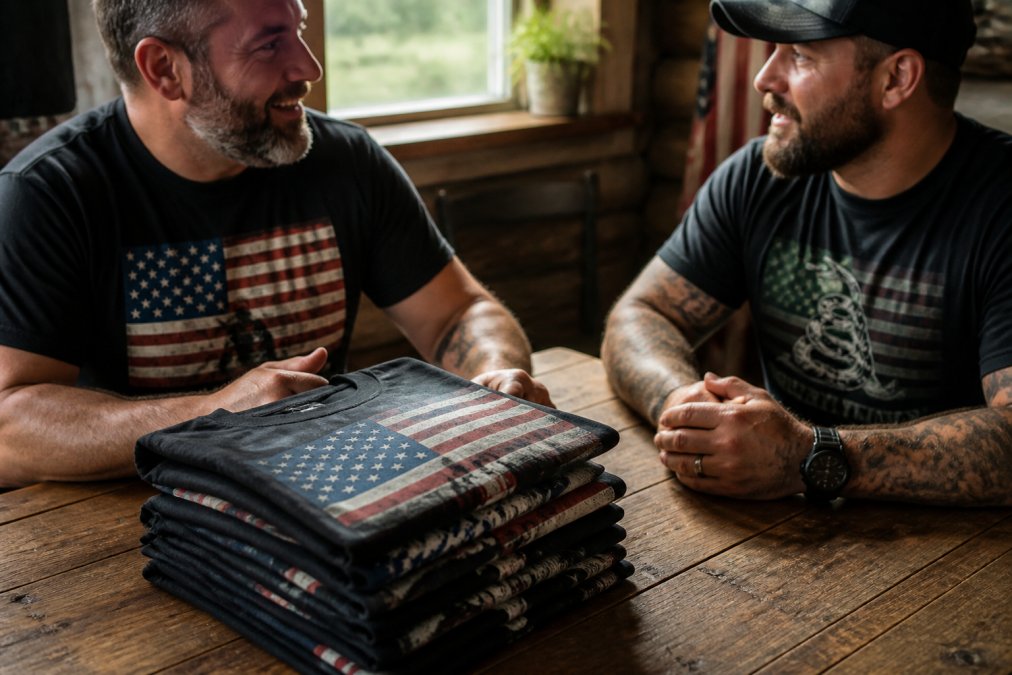
Subtle references, a small flag detail at the hem, a single star on the chest, a national motto in understated typography, read as personal identity rather than public declaration. They work in more settings without requiring the wearer to defend a position.
Full-flag statements are exactly that: statements. A chest-spanning American flag graphic or a design built around a specific political symbol is designed to be seen and read. That is not a flaw. It is the point. The Awake Republic® Unite Our Republic 100% Cotton T-Shirt, for example, draws on national pride, inclusion, and patriotic symbolism.
Sustainable and Ethical Patriotic Manufacturing
Awake Republic LLC produces garments on demand rather than in bulk, a model that directly reduces overproduction and the environmental cost of unsold inventory. Each piece is made when ordered, using 100% cotton. The Brotherhood T-Shirt and Unite Our Republic T-Shirt both follow this model, meaning the patriotic commitment on the front of the shirt is matched by a production philosophy that does not waste resources.

Frequently Asked Questions
Does wearing patriotic clothing signal political affiliation?
Not automatically, but context matters. Patriotic apparel built around national symbols like the flag or historical mottos tends to read as broad national pride. Designs that reference specific policies, political figures, or partisan slogans narrow that signal considerably. The message on the garment, not the flag imagery alone, is what most observers use to assign political meaning. Choosing designs centered on unity and national identity keeps the statement wide rather than partisan.
Is it disrespectful to wear clothes with the American flag?
The U.S. Flag Code discourages using an actual flag as clothing, but flag-inspired imagery printed on fabric is a separate matter and is widely accepted. Courts have consistently treated flag-themed apparel as protected political expression under the First Amendment. Whether a specific design feels respectful depends on its intent and execution. Designs that honor national symbols without distorting or degrading them generally draw no serious criticism, even from veterans and military families.
When is it appropriate to wear a patriotic shirt?
Patriotic apparel fits naturally around national holidays like Independence Day, Memorial Day, and Veterans Day, but there is no rule limiting it to those occasions. Year-round wear is common and increasingly mainstream, especially as streetwear aesthetics have absorbed bold American symbolism into everyday fashion. The more relevant question is setting: a workplace with a dress code may not be the right venue for a graphic tee, but casual outings, rallies, sporting events, and everyday errands are all fair game.
What is the etiquette for wearing flag-themed apparel?
The core principle from U.S. Flag Code guidance is to treat flag imagery with the same respect you would give the actual flag. Avoid designs that place flag graphics on areas subject to wear, soiling, or distortion. Printed flag imagery on the chest or back of a quality garment is broadly considered acceptable. Pairing that imagery with messaging that honors rather than demeans national symbols keeps the overall statement within widely accepted flag etiquette norms.
This article was written using GrandRanker