
How to Spot High Quality T-Shirts: A Complete Guide
Table of Contents
- What Makes a High Quality T-Shirt
- Fabric Weight and Density: The Foundation of Durability
- Material Composition: Why Combed and Ring-Spun Cotton Matters
- Signs of a Well-Constructed T-Shirt
- Evaluating Print Quality and Durability
- How to Wash Graphic Tees to Preserve Quality
- Quality Indicators
- Frequently Asked Questions
Last Updated: September 30, 2026
What Makes a High Quality T-Shirt
A high quality t-shirt isn't just about the label or the price tag. It's about understanding the fundamentals of textile construction, material selection, and manufacturing standards that separate garments built to last from those destined for the donation pile after a few washes. This guide from Awake Republic LLC breaks down exactly what separates a premium t-shirt from its disposable counterpart, with practical methods anyone can use to evaluate quality before buying.

The foundation of any quality t-shirt rests on three pillars: the fabric itself, how it's constructed, and how the graphics or prints are applied and cured. When you know what to look for in each of these areas, spotting high quality t-shirts becomes straightforward. You'll stop relying on brand names and start trusting your own assessment.
Fabric Weight and Density: The Foundation of Durability
Fabric weight, measured in ounces per square yard (oz/yd²) or grams per square meter (GSM), is the single most reliable indicator of how a t-shirt will perform over time. Lightweight shirts, typically under 4.5 oz/yd², feel flimsy in hand and tend to thin out after repeated washing. They lack the structural integrity needed to resist pilling and maintain their shape.
Premium t-shirts typically weigh between 4.2 and 6 oz/yd². This range strikes the balance between comfort and durability. A 4.2 oz/yd² shirt like the Awake Republic® Logo Streetwear T-Shirt feels substantial without being heavy, and the higher fabric density means the fibers are tightly woven together, creating better resistance to wear and tear.

Fabric density works hand-in-hand with weight. A densely woven fabric resists pilling, maintains its color longer, and doesn't develop holes or thin spots as easily. When you hold a high quality t-shirt up to light, you should see a tight, even weave rather than gaps between the threads. The fabric should feel smooth and uniform across the entire surface.
Material Composition: Why Combed and Ring-Spun Cotton Matters
Not all cotton is created equal. The processing method determines how soft the fabric feels, how durable it is, and how well it resists pilling and fading.
Combed cotton goes through an extra step where short fibers and impurities are removed from the raw cotton. This creates a smoother, stronger yarn that produces softer fabric and resists pilling better than regular cotton. Ring-spun cotton is twisted tighter during the spinning process, creating stronger yarns with better durability and a softer hand-feel. When both processes are applied, you get combed and ring-spun cotton, the gold standard for t-shirt production.
Many budget t-shirts use regular cotton that skips these processing steps.
Signs of a Well-Constructed T-Shirt
Construction quality separates a garment that holds up from one that falls apart. The details matter: how seams are stitched, how the collar is reinforced, and how the overall garment is assembled.
Stitching Quality and Seam Integrity
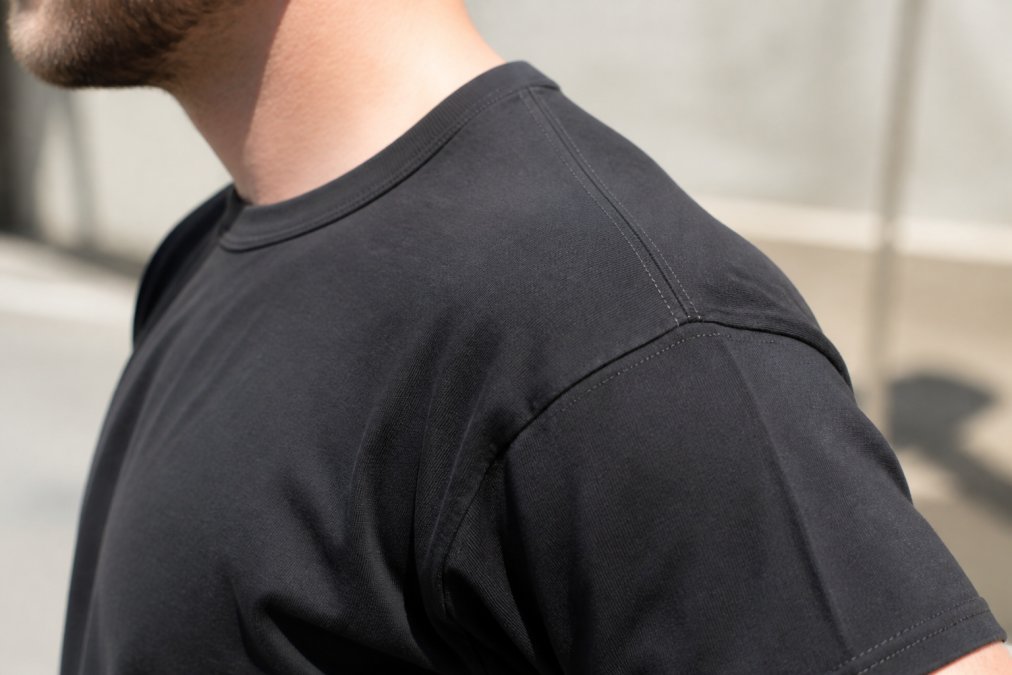
High quality t-shirts use reinforced stitching throughout. The most critical seams, shoulder seams, armholes, and side seams, should be stitched with tight, even stitches that don't pucker or pull. Run your finger along the seams. You should feel a smooth, consistent line with no loose threads or irregular spacing.
Collar Ribbing and Shoulder Taping
The collar is one of the most-used parts of a t-shirt, stretched over the head repeatedly. Quality shirts reinforce this area with thicker ribbing that resists stretching and maintains its shape. The ribbing should feel substantial, not thin or flimsy.
Evaluating Print Quality and Durability
For graphic tees, print quality is as important as the fabric itself. A beautiful design on a low-quality substrate becomes worthless once the print cracks, fades, or peels.
The Stretch Test for Graphic Prints
One of the easiest ways to assess print durability is the stretch test. Gently stretch the printed area between your hands. The ink should move with the fabric without cracking or showing signs of brittleness. If the print feels stiff or cracks slightly when stretched, it wasn't properly cured and will fail quickly in the wash.
Awake Republic® Logo Streetwear T-Shirt →
Curing and Ink Integrity
Ink curing is the process of setting the print into the fabric so it bonds permanently. Properly cured ink has chemically bonded with the fibers, making it resistant to fading, cracking, and peeling. Undercured prints look good initially but fail after a few washes.
How to Wash Graphic Tees to Preserve Quality
Proper washing technique directly impacts how long a high quality t-shirt lasts. Even the best garment deteriorates quickly if washed incorrectly.
The Wash Test Protocol
Before committing to a shirt, conduct a simple wash test to verify quality. Wash a small inconspicuous area of the print (or an extra shirt if you're buying multiples) using your normal washing method. Check the print afterward for cracking, fading, or peeling.
Quality Indicators
Quality Indicator |
What to Look For |
Why It Matters |
|---|---|---|
Fabric Weight |
4.2-6 oz/yd² (140-200 GSM) |
Heavier fabrics resist pilling and maintain shape longer |
Material |
100% combed and ring-spun cotton |
Softer, stronger, better color retention |
Stitching |
Tight, even, reinforced seams |
Prevents fraying and seam failure |
Collar Ribbing |
Substantial, maintains shape |
Resists stretching after repeated wear |
Shoulder Tape |
Reinforced inside seams |
Distributes stress and prevents splitting |
Print Quality |
Flexible, no cracking when stretched |
Indicates proper curing and durability |
Weave |
Tight, even, no visible gaps |
Better durability and resistance to pilling |
Frequently Asked Questions
What specific fabric characteristics indicate a high-quality t-shirt?
High-quality t-shirts typically feature combed and ring-spun cotton with a fabric weight between 4.2 oz./yd² (142 g/m²) and higher. Look for pre-shrunk fabric to prevent shrinkage, side-seamed construction for durability, and shoulder-to-shoulder taping that reinforces the neckline. These characteristics work together to create a garment with better hand-feel, breathability, and structural integrity that resists pilling and maintains its shape through repeated washing.
How does the weight of the fabric affect t-shirt quality?
Fabric weight directly impacts durability and longevity. Heavyweight cotton t-shirts (typically 4.2 oz./yd² or higher) offer superior tensile strength and resistance to wear, making them less prone to thinning or tearing. Heavier fabrics also provide better colorfastness, meaning prints and dyes hold their color longer. The increased GSM (grams per square meter) indicates a denser fabric weave with more fibers per inch, which translates to a shirt that maintains its appearance and structural integrity across many wash cycles.
How can you tell if a graphic print will last through multiple washes?
Perform the stretch test: gently pull the fabric in different directions where the print is applied. A quality print should flex with the fabric without cracking or peeling. Check the print edges for sharp definition rather than blurred or feathered edges. High-quality printing involves proper curing, where the ink bonds completely with the fibers. If a print feels stiff, plasticky, or separates easily from the fabric, it indicates poor curing and will crack after a few washes. Awake Republic's graphic tees use properly cured inks that maintain integrity through regular washing.
Why should I invest in a high-quality t-shirt over a cheaper alternative?
High-quality t-shirts cost more because of superior materials, construction methods, and durability. A shirt made from combed and ring-spun cotton with reinforced stitching and proper print curing will outlast cheaper alternatives by years, making the cost-per-wear significantly lower. Quality shirts maintain their shape, color, and structural integrity through dozens of washes, while low-quality options develop pilling, fading, and seam separation within months. When you buy from brands like Awake Republic at $19.99, you're investing in a garment designed to be worn regularly without degradation, rather than a disposable piece that requires frequent replacement.
What are the signs of poor construction in a t-shirt?
Poor construction includes single-stitched seams instead of reinforced stitching, loose or uneven stitching that gaps when stretched, thin collar ribbing that loses its shape quickly, and missing shoulder-to-shoulder taping. Check for loose threads, uneven hems, and seams that pucker or pull. Low-quality garments often have weak side seams that split after a few washes. The fabric itself may feel thin, flimsy, or have visible pilling after minimal wear. Prints that feel stiff, crack when flexed, or fade dramatically after one wash also indicate poor quality control and inadequate curing processes.
How do I know if a t-shirt is actually made from quality cotton?
Quality cotton should be labeled as combed and ring-spun, which means the fibers have been processed to remove short fibers and twist them together for strength. Look for a fabric weight specification (ideally 4.2 oz./yd² or higher) and check if the shirt is pre-shrunk to prevent unexpected shrinkage. High-quality cotton feels soft and has a smooth hand-feel without being slick or synthetic-feeling. Examine the fiber length: longer-staple cotton (like Pima or Egyptian varieties) creates softer, more durable shirts. Avoid shirts with vague descriptions like 'cotton blend' without specifying the percentage or fiber type.
Does a higher price tag always guarantee a better quality t-shirt?
Not always, but price often reflects quality when you're comparing similar styles. A $19.99 premium t-shirt with combed ring-spun cotton, proper construction, and cured graphics will outperform a $5 shirt every time. However, some brands charge premium prices for branding or marketing rather than material quality. The best approach is to examine the actual specifications: fabric weight, material composition, construction details, and print quality. Compare shirts based on these tangible factors rather than price alone. Awake Republic offers quality construction at accessible prices.