
Durable Patriotic Apparel That Lasts: 2026 Buying Guide
Table of Contents
- What Separates Durable Patriotic Apparel From Fast Fashion
- The Best Fabric for T-Shirts Built to Last
- How to Wash Graphic Tees Without Cracking the Print
- Durable Graphic Tees: What Wear and Wash Testing Reveals
- Cost Per Wear: Why a $30 Shirt Can Beat a $12 Shirt
- Matching Durability to Use: Everyday Wear, Outdoor Wear, and Workwear
- Where Durable Patriotic Apparel Fits in a Modern Wardrobe
- Frequently Asked Questions
Last Updated: October 14, 2026
What Separates Durable Patriotic Apparel From Fast Fashion
Durable patriotic apparel that lasts is built around three things: fabric weight, fiber content, and how the seams are finished. Get those right and a shirt survives years of washing.
This guide from Awake Republic LLC breaks down what actually holds up, how to spot weak construction before you buy, and how to wash graphic tees so the design stays sharp.

The difference shows up fast. A heavier ring-spun cotton tee with taped shoulders and side seams keeps its shape through repeated washing. Federal Trade Commission guidance on textile and apparel labeling requires accurate fiber content disclosure, so the tag tells you what you're actually buying.
Fabric Weight and Fiber Content
Fabric weight is measured in ounces per square yard, and it's the single best predictor of how a tee wears. Most fast-fashion tees land in the 3.5 to 4.0 oz./yd.² range.
Fiber content matters just as much. Combed and ring-spun cotton creates a smoother, stronger yarn than standard carded cotton. Pre-shrunk fabric means the shirt you buy is close to the shirt you keep.
Stitching and Construction Signals
Construction is where cheap apparel gives itself away. Look for side-seamed construction instead of tubular bodies, since side seams prevent the torso from twisting after washing.
Check the collar too. A cover-stitched collar holds its shape; a thin, single-stitch collar ripples and stretches. The thing nobody tells you about patriotic shirts is that the graphic is only half the story.
The Best Fabric for T-Shirts Built to Last
The best fabric for T-shirts built to last is 100% combed ring-spun cotton in the 4.0 to 4.5 oz./yd.² range. It balances breathability, print durability, and shape retention better than most blends for everyday wear.
Cotton, Poly-Cotton, and Rayon Blends Compared
Each fabric serves a different purpose. Matching the blend to how you'll wear the shirt matters more than chasing a single "best" option.
Fabric |
Durability |
Print Retention |
Best For |
|---|---|---|---|
100% combed ring-spun cotton |
High |
High |
Everyday wear, breathable comfort |
Poly-cotton blend |
High |
Very high |
Workwear, frequent washing |
Rayon blend |
Medium |
Medium |
Drape and softness, lighter wear |
Cotton-poly fleece |
High |
Medium |
Hoodies, cooler weather layering |
Pure cotton wins on comfort and takes a screen print or direct-to-garment print cleanly. Poly-cotton holds up best under heavy washing cycles, which is why it dominates workwear. Rayon blends feel softer but tend to lose shape faster.
How to Wash Graphic Tees Without Cracking the Print
Washing graphic tees correctly comes down to four habits: turn them inside out, use cold water, skip the dryer, and treat stains before they set. These steps protect the print and the fabric at the same time.
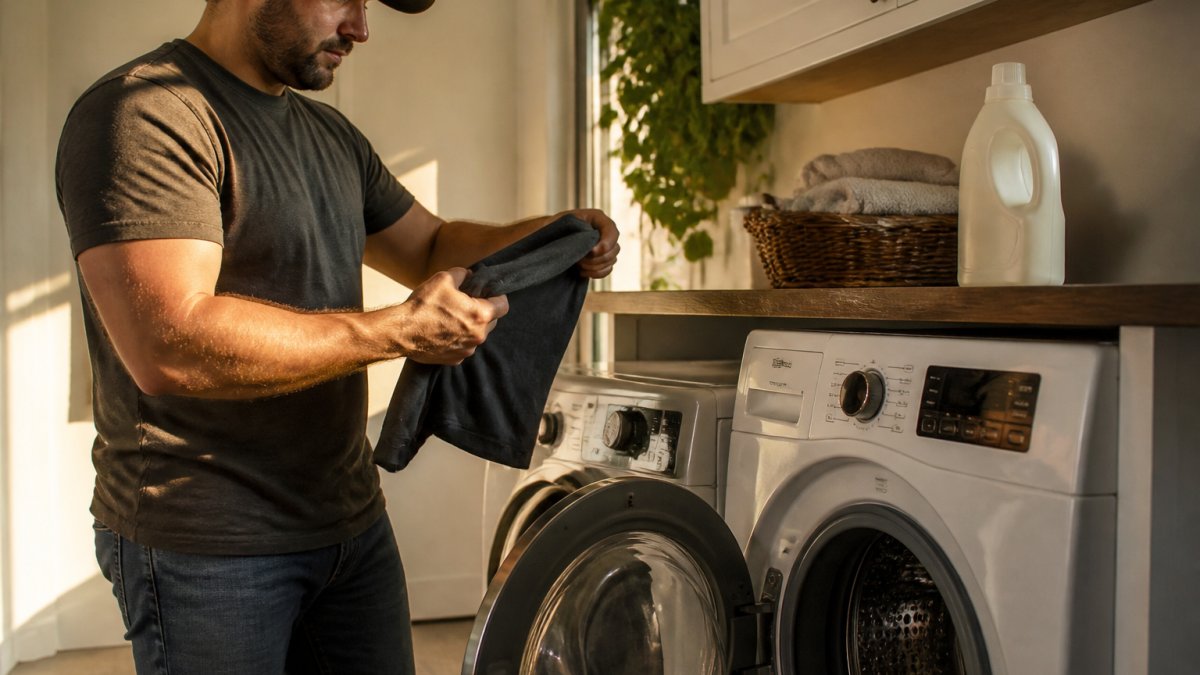
Heat is the enemy. Hot water and high dryer temperatures break down the adhesive and ink bond that holds a graphic in place. Over time, that's what causes cracking, peeling, and fading.
The Wash Routine, Step by Step
- Turn the shirt inside out before washing so the print rubs against fabric, not the drum or other garments.
- Wash in cold water on a gentle or delicate cycle. Cold water slows dye loss and keeps the ink bond intact.
- Use mild, liquid detergent and skip fabric softener and dryer sheets. Softener leaves a residue that can dull a print and coat the fibers.
- Wash graphic tees with similar colors and weights. Heavy items like jeans and towels abrade the print and the knit.
Stain Treatment That Doesn't Ruin the Print
Act fast. The longer a stain sits, the more it bonds to the fiber and the harder it is to lift without harsh treatment.
- Blot, don't rub. Rubbing pushes the stain deeper and can abrade the print.
- For oil and grease, apply a small amount of liquid dish soap or a pre-treatment stain remover directly to the stain, let it sit a few minutes, then wash in cold water.
- For protein stains like grass or blood, rinse with cold water first. Hot water sets protein stains.
- For ink or marker, dab with isopropyl alcohol on a cotton swab, working from the outside of the stain inward.
Drying and Storage
How you dry and store a shirt matters as much as how you wash it.
- Air-dry on a hanger or flat on a rack. Hanging a wet shirt by the shoulders can stretch the neckline; laying it flat preserves shape.
- Keep shirts out of direct sunlight while drying. UV light fades both the fabric dye and the print ink.
- Store folded, not on wire hangers, to avoid shoulder dimples and neckline stretch.
- Keep stored shirts in a cool, dry place. Damp basements and hot attics degrade cotton and print adhesives over time.
Following this routine is the difference between a print that lasts a season and one that lasts several years. The care steps cost nothing extra and add years of wear to a well-built shirt.
Durable Graphic Tees: What Wear and Wash Testing Reveals
Wear and wash testing shows a consistent pattern: construction failures appear before print failures. Seams, collars, and shoulder tape usually give out first if the blank is weak. A well-built blank with a modest graphic outlasts a flimsy blank with a complex one every time.
This section covers two things most guides skip: how to assess durability before you buy, and what repeated laundering actually does to a shirt over time.
Pre-Purchase Durability Checklist
Use this checklist on the tag, the listing, or the shirt in your hands:
Awake Republic® We The People 250 T-Shirt (100% Cotton) →
- Check fabric weight on the tag or listing. Heavier knits resist thinning and hold shape longer.
- Confirm side-seamed construction. Side seams prevent the torso from twisting after washing.
- Look for shoulder-to-shoulder taping. This reinforces the highest-stress area on any tee.
- Inspect the collar stitching. A cover-stitched collar holds its shape; a thin single-stitch collar ripples and stretches.
What Repeated Washing Actually Does
A common pattern across repeated laundering is predictable. After roughly 10 to 20 wash-and-dry cycles, the differences between a well-built and a cheaply built shirt become obvious:
- Shrinkage. Pre-shrunk cotton stabilizes after the first wash or two. Unshrunk or lightly shrunk cotton can lose noticeable length and width over the first several washes, especially in the dryer.
- Fading. Print ink and fabric dye both fade with heat and abrasion. Cold water and air-drying slow this dramatically. A print washed hot and dried on high can visibly dull within a season.
- Pilling. Short-staple, loosely knit cotton pills at friction points like under the arms and along the sides. Combed and ring-spun cotton resists pilling because the fibers are longer and smoother.
- Seam integrity. Side seams and shoulder tape are the first structural failure points. A shirt with weak seams can develop twisting, gaping, or separation before the print shows any wear.
- Collar breakdown. A single-stitch collar stretches and ripples; a cover-stitched collar keeps its shape through repeated washing.
Cost Per Wear: Why a $30 Shirt Can Beat a $12 Shirt
Cost per wear is the real price of a garment.
A $12 tee that fades after 20 wears costs about $0.60 per wear. A $30 tee worn 150 times costs $0.20 per wear.
Consumer guidance on clothing care and longevity from the American Cleaning Institute supports the idea that proper care extends garment life, which lowers cost per wear further.
Matching Durability to Use: Everyday Wear, Outdoor Wear, and Workwear
Durability requirements change with the use case. An everyday tee needs comfort and shape retention. Outdoor wear needs weather-ready layering and warmth. Workwear needs abrasion resistance and frequent-wash resilience.
Use Case |
Priority |
Best Fabric |
Layer It With |
|---|---|---|---|
Everyday wear |
Comfort, shape retention |
100% combed ring-spun cotton |
Nothing or a light jacket |
Outdoor wear |
Warmth, weather resistance |
Cotton-poly fleece, softshell |
Hoodie under a shell |
Workwear |
Abrasion resistance, washability |
Poly-cotton blend |
Long sleeve tee as a base |
For cooler weather, a long sleeve tee layered under a hoodie or jacket covers most situations. Awake Republic's We The People 250 Long Sleeve T-Shirt uses 100% airlume combed ring-spun cotton with cover-stitched collar and ribbed cuffs, which makes it a solid layering piece.

Where Durable Patriotic Apparel Fits in a Modern Wardrobe
Durable patriotic apparel belongs in a wardrobe as a long-term staple, not a one-event purchase. The goal is a small set of pieces that wear proudly for years.
Awake Republic builds around that idea. The brand's We The People 250 T-Shirt uses 100% combed and ring-spun cotton at 4.2 oz./yd.² with pre-shrunk fabric, side-seamed construction, and shoulder-to-shoulder taping.
Pricing sits between $19.99 and $33.99, which puts cost per wear well below fast-fashion replacements when the shirt lasts years instead of months.
Frequently Asked Questions
What makes a graphic T-shirt durable?
Fabric weight, fiber content, and print method decide how long a graphic tee lasts. Heavier combed ring-spun cotton (around 4.2 oz./yd.²) resists thinning and holds shape through repeated washes. Look for side-seamed construction and shoulder-to-shoulder taping, which stop twisting and stretching at the neckline. Print quality matters too: a cured, well-applied graphic stays flexible instead of cracking. If the fabric feels thin and the seams look single-stitched, expect it to wear out within a season.
How do you wash graphic T-shirts without damaging the print?
Turn the shirt inside out, wash cold on a gentle cycle, and skip the dryer. Heat is what cracks and fades prints, so cold water and air drying protect the graphic. Use a mild detergent and avoid fabric softener, which leaves a residue that breaks down print adhesion over time. If you must machine dry, use the lowest heat setting and remove the shirt while slightly damp. Following this routine on durable graphic tees can keep the design looking new for years.
How long should a quality T-shirt last?
A well-made cotton tee worn weekly and washed properly typically holds its shape and print for two to three years. Shirts with heavier fabric, reinforced seams, and quality printing can stretch beyond that. Cost per wear tells the real story: a $30 shirt worn 100 times costs $0.30 per wear, while a $12 shirt that pills and fades after 20 wears costs $0.60. Durability is the better value even when the upfront price is higher.
The challenge with patriotic apparel is that most of it looks good on day one and falls apart by year two. Choosing well-built pieces from the start solves that. Awake Republic offers original graphic tees and streetwear built on pre-shrunk, side-seamed 100% combed ring-spun cotton, with shoulder-to-shoulder taping and designs that commemorate 250 years of independence. Get started with Awake Republic and build a wardrobe of durable patriotic apparel that lasts.